2026 Top Trends in 3 Way Valve Technology and Applications?
The world of valve technology is evolving rapidly. Among these innovations, the "3 way valve" stands out prominently. Engineers and designers are pushing boundaries in its applications across various industries. Advanced materials and smart technology are enhancing valve performance and efficiency.
As we look to 2026, several trends emerge in 3 way valve technology. Automation is one major trend. Smart home systems and industrial automation are integrating these valves for better control. Also, sustainability is becoming increasingly important. Eco-friendly materials are now part of the design process, which reduces environmental impact.
However, challenges remain. Designers must balance performance with cost. Finding affordable materials that do not compromise on quality is difficult. There is also the ongoing need for education on these advanced systems. Professionals must stay updated on the latest trends and technologies. This will be crucial for maximizing the potential of 3 way valves in the coming years.

Current Technologies in 3 Way Valve Design and Functionality
Three-way valves play a crucial role in various industries, including oil and gas, water treatment, and chemical processing. Current technologies have significantly advanced the design and functionality of these valves. For instance, the global three-way valve market is expected to grow substantially, reaching an estimated value of $7.5 billion by 2026. This surge is driven by increasing demand for efficient fluid control systems.
Modern three-way valves feature enhanced materials that resist corrosion and temperature fluctuations. These advancements improve operational longevity and reduce maintenance costs. Additionally, smart technologies are now integrated into valve systems, allowing for real-time monitoring and automation. Research suggests that automated three-way valves can reduce energy costs by up to 30% through optimized flow management. However, challenges remain. Many industries still rely on outdated systems that do not leverage these advancements. This can lead to inefficiencies and higher operational costs.
The importance of proper installation and regular maintenance cannot be overlooked. Many facilities have experienced failures due to improper setup or lack of upkeep. Such issues highlight the need for training and awareness among personnel. There's a gap in understanding the potential benefits of modernizing three-way valve systems. Many companies hesitate to invest in new technologies, fearing upfront costs without seeing immediate benefits. Balancing innovation with traditional practices is essential for the future of three-way valve applications.
Innovative Materials Used in Modern 3 Way Valve Manufacturing
Innovative materials are shaping the future of three-way valve manufacturing. The quest for improved efficiency drives the exploration of new composites. Recently, manufacturers have turned to advanced polymers for their lightweight and corrosion-resistant properties. These materials withstand harsh conditions, making them ideal for various applications.
Metal alloys are still vital but are evolving. High-strength stainless steels provide excellent performance but can be heavy. New alloy compositions are emerging, promising reduced weight without sacrificing strength. Engineers must balance cost and durability issues.
These advancements raise questions. Will they stand the test of time? How will they perform under extreme conditions? Continued research and testing are essential for long-lasting solutions. There is excitement about potential applications, yet uncertainty looms. Material choices will significantly impact the efficiency and reliability of three-way valves in the years to come.
Emerging Applications of 3 Way Valves in Various Industries
The emerging applications of 3-way valves are making waves across various industries. The oil and gas sector heavily relies on these valves for fluid control. According to industry reports, the global market for 3-way valves is projected to reach $3 billion by 2026. These valves facilitate efficient switching between flow paths, enhancing operational efficiency.
In the chemical processing industry, 3-way valves are critical. They manage the mixing and routing of different chemicals. By optimizing these processes, companies can reduce waste and improve safety. A recent study indicated that 3-way valves can improve efficiency by up to 15%. However, adaptation challenges exist. Not all facilities have the necessary infrastructure or trained personnel.
Additionally, the HVAC sector is increasingly adopting 3-way valves for better temperature regulation. These valves control water flow in heating and cooling systems. Yet, their implementation isn’t without flaws. Some systems struggle with compatibility issues, leading to performance inconsistencies. Despite these challenges, the future of 3-way valve technology looks promising.
2026 Top Trends in 3 Way Valve Technology and Applications
Impact of Automation and IoT on 3 Way Valve Systems
The integration of automation and IoT within three-way valve systems is transforming industries. These advances streamline processes and enhance operational efficiency. Smart valves, equipped with sensors, communicate critical data in real time. This feature enables swift adjustments based on system demands. For instance, a plant can optimize flow rates, significantly reducing waste.
However, implementing these technologies presents challenges. The complexities of IoT integration can lead to compatibility issues. Additionally, data security becomes a pressing concern as more devices connect. There is also a steep learning curve for personnel. New skill sets are needed to manage and maintain these advanced systems effectively. Balancing innovation and practicality remains essential.
As industries embrace these changes, the importance of reliable data cannot be overstated. Real-time analytics can greatly improve decision-making. Yet, companies must ensure their infrastructure can handle this influx of information. Overlooking this aspect may lead to unforeseen inefficiencies or system failures. The future of three-way valve technology promises exciting developments, but careful consideration is vital.
Future Projections for 3 Way Valve Trends and Market Growth
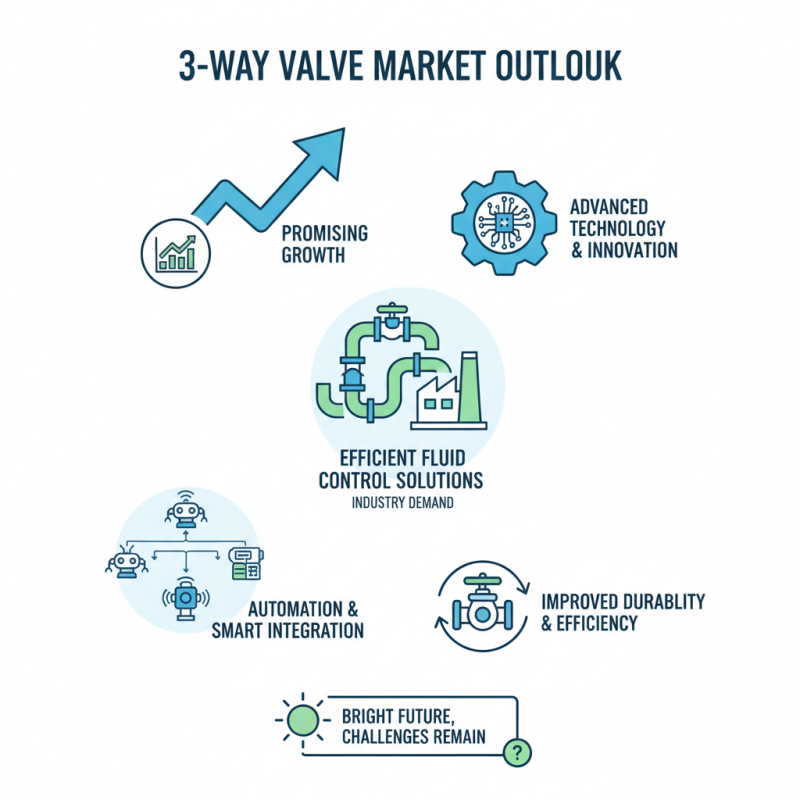
The 3-way valve market is witnessing promising growth. Advanced technology drives innovation. Industries demand efficient fluid control solutions. This trend reflects a larger push towards automation and smart system integration. Manufacturers are focusing on improving the durability and efficiency of these valves. The future looks bright, but challenges remain.
Tips: Consider energy efficiency and sustainability when choosing valves.
Growth in the oil and gas sector contributes to this rise. New applications are emerging in HVAC, pharmaceuticals, and food processing. Companies are exploring materials that enhance performance in extreme environments. However, competition is fierce. There are many products vying for market share, which makes navigation tricky.
Tips: Regular maintenance can extend valve lifespan.
Integration with IoT is another trend. Smart valves can monitor conditions in real time. This capability helps reduce operational costs but requires investment. Companies must weigh the benefits against their budgets. The need for trained personnel to handle these technologies is crucial as well.