What Is the Best Cast Resin Transformer for Global Buyers?
Choosing the best Cast Resin Transformer requires more than comparing price, capacity, and delivery time. Global buyers must examine insulation class, partial-discharge performance, cooling conditions, noise limits, fire safety, and service support. A 1,600 kVA unit in a clean factory faces different risks from one installed beside a humid coastal plant.
MarketsandMarkets reports continued growth in the global dry-type transformer market, driven by urban infrastructure, renewable generation, and stricter indoor-safety requirements. Grand View Research also identifies energy efficiency and fire-resistant designs as important market drivers. These reports offer useful direction, but their forecasts are not project specifications. Conditions still vary widely.
Dr. S. V. Kulkarni, a recognized transformer engineer and author of Transformer Engineering, states, “Transformer selection is a system decision, not a catalogue decision.” That principle matters when evaluating a Cast Resin Transformer for international use. Buyers should request temperature-rise data, short-circuit strength, acoustic readings, factory-test records, and evidence of compliance with IEC 60076 requirements.
There is no universal winner.
A strong candidate should tolerate overloads, dust, vibration, and uneven maintenance practices. Resin quality matters, yet installation quality matters just as much. Cable termination, ventilation, and clearances can quietly determine service life. This is where many buying guides become too confident. A lower purchase price may look attractive, but unavailable spare parts can create costly downtime. The best transformer is therefore the one that fits the grid, site, climate, standards, and long-term support plan.
What Is a Cast Resin Transformer?
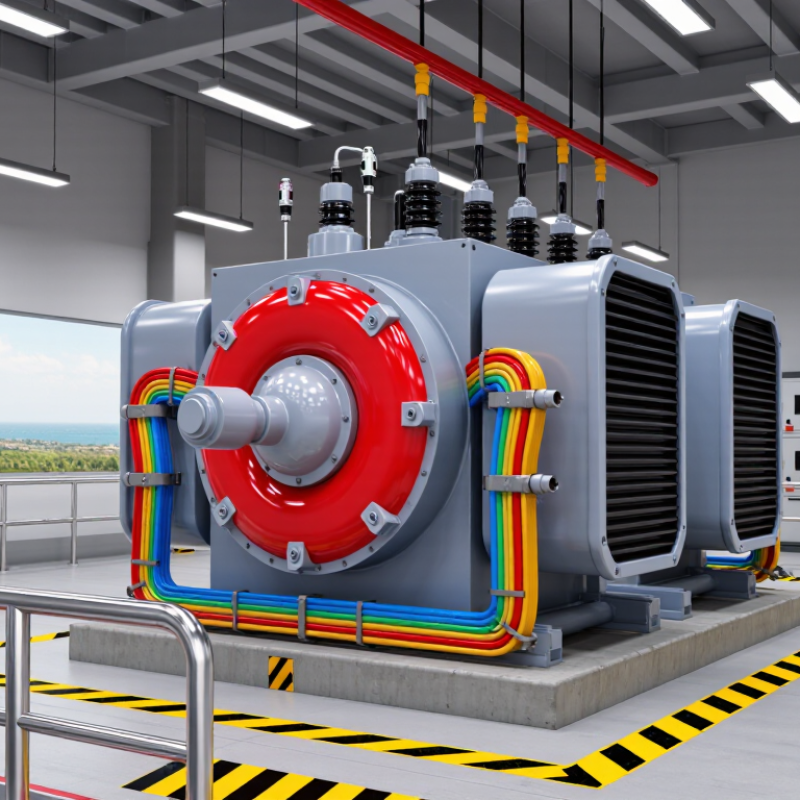
A cast resin transformer is a dry-type transformer with windings encapsulated in solid epoxy resin. The resin surrounds the conductors and reduces exposure to dust, moisture, and corrosive air. Unlike oil-filled equipment, it uses no liquid insulation or oil containment system. That can simplify indoor installation, especially in hospitals, commercial buildings, tunnels, and factories.
The best cast resin transformer for global buyers depends on operating conditions, not just purchase price. Engineers should check rated voltage, power capacity, insulation level, temperature rise, cooling method, and short-circuit strength. A winding may look excellent, yet perform poorly in a hot, humid enclosure. Altitude also matters because thinner air reduces cooling efficiency. Harmonic loads from drives and electronic equipment can create extra heating. Small details become expensive later.
Reliable evaluation includes factory test records, routine testing, partial-discharge results, and clear technical drawings. Buyers should also confirm compliance with applicable national standards and local installation rules. Ask about resin quality, fire performance, noise level, spare components, and service support. In practical projects, unclear ambient conditions often cause wrong specifications. That mistake is easy to make. A careful site survey should record temperature, humidity, altitude, load patterns, ventilation, and available space before final selection.
How Cast Resin Transformers Work and Where They Are Used
What Is the Best Cast Resin Transformer for Global Buyers?
Cast resin transformers convert medium voltage into usable low voltage through electromagnetic induction. Their windings are sealed in epoxy resin, which protects copper and insulation from moisture, dust, and many corrosive contaminants. No oil is involved. Heat moves through the resin and surrounding air, so correct ventilation remains essential. IEC 60076-11 classifies these units as dry-type transformers and addresses insulation, temperature rise, and routine testing requirements.
Their strongest applications are indoor substations, hospitals, airports, factories, tunnels, and high-rise buildings. A 2023 U.S. Department of Energy analysis estimated that stronger distribution-transformer efficiency standards could save 3.63 quadrillion British thermal units over thirty years. That figure covers several transformer designs, not cast resin units alone. Still, it shows why losses matter during long operating hours. Engineers should check no-load and load losses, short-circuit strength, altitude, ambient temperature, and acoustic limits. A compact enclosure may look ideal, but restricted airflow can raise winding temperature quickly. That changes installation.
A common blind spot is selecting only by purchase price. Cast resin equipment usually costs more upfront than some oil-filled alternatives. It can reduce fire-risk concerns and simplify indoor placement, yet resin repairs are not always simple after severe damage. Buyers should request verified test reports, local grid compatibility, spare-part plans, and documented factory quality procedures. The best choice is application-specific, not merely the smallest or most efficient unit. I would still question any quotation that hides thermal data.
Which Performance Factors Matter for Global Buyers?
For global buyers, the best cast resin transformer is not simply the smallest or cheapest unit. Performance must match the installation’s climate, load profile, and maintenance capability. IEC 60076-11 defines key requirements for dry-type transformers, including insulation, temperature rise, and partial discharge. These details matter in a dusty factory or a humid coastal substation.
Losses deserve close attention. The European Commission’s transformer preparatory study reported that transformers consume about 2.5% of Europe’s electricity, creating a major efficiency opportunity. No-load loss continues whenever the transformer is energized. Load loss rises with current. Buyers should request tested values for both, then calculate annual energy cost using their real loading pattern. A low purchase price can become expensive after years of operation.
Thermal behavior is equally important. Cast resin windings should be evaluated against rated temperature rise, overload tolerance, and cooling conditions. IEC 60076-11 testing can support confidence, but laboratory results are not the whole story. Actual ventilation, altitude, harmonic currents, and enclosure design may change performance. IEEE C57.12.01 also provides useful dry-type transformer requirements for North American projects. Partial discharge results below the project limit are valuable. Still, one test cannot predict every field problem. Buyers should compare noise, fire performance, impedance, service access, and documented factory quality records. Small omissions here often create large installation costs.
How to Compare Safety, Efficiency, and Total Ownership Cost
The best cast resin transformer is not always the one with the lowest purchase price. Compare safety, efficiency, and total ownership cost together. During site assessments, engineers should check fire zones, ventilation, humidity, dust, and available clearance. Cast resin units avoid liquid leakage, but their coils still need clean airflow. IEC 60076-11 provides the testing framework for dry-type transformers, including insulation, temperature-rise, and partial-discharge performance.
Efficiency deserves closer attention. The U.S. Department of Energy’s 2016 technical analysis estimated 3.63 quadrillion Btu of energy savings over 30 years from stronger distribution-transformer standards. Even small loss differences matter when a transformer operates continuously. Request no-load and load-loss data at realistic loading, not only the headline efficiency figure. A 1,000 kVA unit running at 40% load behaves differently from one operating near 85%. Measure noise, thermal rise, maintenance access, and expected service life. Keep records.
Total ownership cost should include installation, testing, ventilation, energy losses, inspections, downtime risk, and eventual replacement. A cheaper unit may require a larger room or more cooling equipment. That changes the calculation. Energy-cost forecasts can also be wrong. Use several electricity-price scenarios and document every assumption. The International Energy Agency continues to identify grid efficiency as important for managing rising electricity demand, but each project still needs local operating data. A spreadsheet is useful, not infallible.
How to Select a Reliable Cast Resin Transformer Supplier
Choosing the best cast resin transformer depends less on polished brochures and more on supplier evidence. A reliable supplier should provide clear routine and type-test reports. These documents must show voltage, power rating, insulation level, temperature rise, and applicable standards. Ask whether testing occurs internally or through an independent laboratory. Experienced engineers can explain design limits, cooling conditions, and expected service life. Vague answers deserve caution.
Review manufacturing controls on site or through a qualified audit. Look for resin mixing records, curing temperatures, coil inspection points, and calibrated testing equipment. Traceability should connect each transformer to materials, operators, and inspection results. Request partial discharge data, impulse test results, and enclosure protection details. Packaging also matters. Moisture indicators and shock labels can protect equipment during long-distance shipping. These small details reveal operational discipline.
Commercial reliability matters as much as technical performance. Compare lead times, spare-part access, warranty boundaries, and response times for technical support. Ask for installation instructions, maintenance guidance, and records from similar climate conditions. No supplier is flawless. A missed inspection point may expose a weak process. The supplier’s response matters: do they investigate openly and improve the procedure? Independent customer references can confirm whether promised support exists after delivery. The best partner communicates limitations clearly, documents every critical step, and adapts designs without hiding risks. That standard is demanding, but it protects the transformer and the project.


