

Wholesale demand for immersive outdoor themes is rising with the broader outdoor-living market. Grand View Research reports continued expansion in outdoor furniture, while The Freedonia Group identifies recreation-focused spending as an important design influence. These reports do not measure dinosaur outdoor decorations directly. That gap matters. Buyers still need practical evidence before placing large orders.
This guide examines ten wholesale-friendly options, from lightweight resin dinosaurs to weather-resistant inflatable displays. Each choice is considered for visual impact, material durability, packaging efficiency, safety labeling, and seasonal storage. A Tyrannosaurus near a garden entrance should look imposing, not unstable. A small Velociraptor should survive repeated handling without losing paint around its claws.
Scientific credibility also improves commercial value. Paleontologist Jack Horner has repeatedly shared the concise observation, “Birds are dinosaurs.” That idea encourages suppliers to balance theatrical design with recognizable anatomy. Accurate proportions may attract museums, parks, retailers, and family entertainment venues. Still, visual accuracy alone cannot guarantee sales. I have seen attractive displays fail because cartons were oversized, colors faded outdoors, or assembly instructions were unclear. Buyers should question optimistic product claims and request samples, test photographs, and packing details. The strongest Dinosaur Outdoor Decorations combine memorable silhouettes, dependable construction, and manageable wholesale logistics.
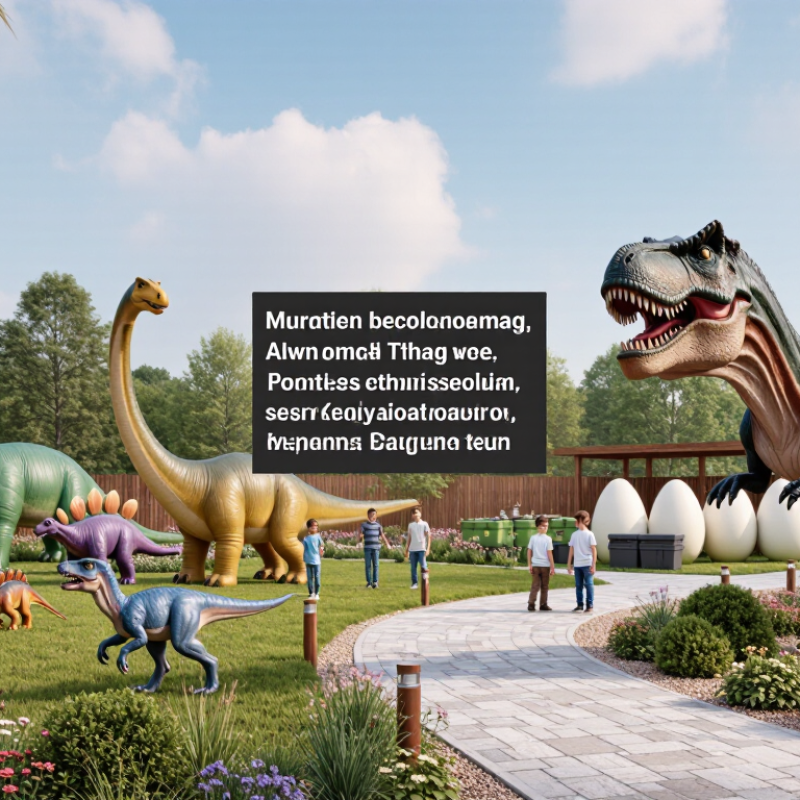
Wholesale buyers should divide dinosaur décor by visitor use, weather exposure, and installation speed. Static fiberglass dinosaurs suit entrance displays, garden paths, and retail promotions. Their solid forms provide strong visual impact with limited maintenance. Animatronic models create movement and sound, but they require electrical planning, covered controls, and regular inspection. Inflatable dinosaurs offer lighter logistics and quick seasonal deployment. They need firm anchoring and careful wind management.
Interactive categories can include fossil-dig stations, footprint trails, photo frames, and educational signage. These pieces support longer visitor engagement and can fill spaces between large figures. Modular sets are especially practical for buyers serving museums, zoos, parks, and event operators. They allow different layouts without purchasing a complete display again.
Material categories should be separated clearly. Fiberglass and reinforced resin provide durable sculptural surfaces, while treated steel supports larger frames. UV-resistant coatings help protect color in open sunlight.
Grand View Research valued the global amusement parks market at approximately 64.19 billion dollars in 2023 and projected continued growth through 2030. This supports demand for durable, reusable decoration systems. However, catalog ratings are not enough. Buyers should request sample finishes, load information, packing photographs, and replacement-part data. A few suppliers may overstate outdoor durability. That deserves a second look.
For wholesale buyers, outdoor dinosaur displays must combine visual impact with dependable construction. A large head attracts attention, but hidden materials decide service life. Most commercial models use a welded steel frame beneath molded fiberglass or reinforced polymer skins. Steel provides structural support. Fiberglass keeps the body relatively light and resists rain. Flexible silicone or rubber sections can improve movement around mouths, eyes, and tails. These parts need careful sealing.
Look for UV-resistant paint, sealed electrical compartments, drainage points, and stainless or galvanized fasteners. These details matter under strong sunlight and repeated wet weather. A textured surface can imitate scales while hiding minor scratches. Motion systems should use protected motors, limit switches, and replaceable cables. Ask suppliers for material specifications, load guidance, and outdoor testing records. Photos alone are not enough. In my buying experience, weak anchors create more problems than dramatic sculpting. Base plates, ground bolts, and wind considerations deserve equal attention.
For shipment, sectional designs reduce crate size and simplify installation. Check whether joints are numbered and whether spare hardware is included. Maintenance is easier when access panels remain discreet but reachable. One overlooked issue is color fading after several seasons. No coating lasts forever. Buyers should compare warranty terms, repair methods, and local climate exposure before ordering volume. A display may look impressive on delivery day, yet poor drainage can quietly shorten its useful life. That is the part I would inspect twice.
This chart compares the approximate maximum body lengths of ten popular dinosaur concepts, providing a factual reference for selecting display scale, shipping volume, and installation requirements. Fiberglass-reinforced plastic is commonly used for durable exterior shells, while galvanized steel frames provide structural support. Polyurethane foam can be used for lightweight sculpted details, with UV-resistant outdoor paint and protective clear coatings recommended for long-term exposure.
Lengths are approximate paleontological estimates and should be treated as scaling references rather than fixed decoration dimensions.
Wholesale buyers should evaluate dinosaur outdoor decorations beyond appearance. Start with the intended setting: garden paths, family venues, seasonal displays, or commercial entrances. Measure the available space carefully, including walking clearance and delivery access. Measure twice. A realistic model may look impressive online but overwhelm a small entrance.
Inspect the material, frame, paint, and support system. Fiberglass, treated resin, and reinforced metal can perform differently under sunlight, rain, and temperature changes. Ask for UV-resistance details, drainage design, and wind-stability instructions. Check whether the base includes anchor points or requires separate hardware. Request close-up photos of seams and painted surfaces. Small details matter. I once underestimated packaging quality, and a decorative tail arrived with surface damage. The display looked good, but the replacement delayed installation.
For wholesale purchasing, compare sample quality with production promises. Confirm dimensions, color consistency, carton strength, minimum order quantity, lead time, and spare-part availability in writing. Ask whether each unit receives protective wrapping around fragile horns, claws, and raised textures. Calculate the landed cost, not only the factory price. Include freight, storage, assembly labor, and possible repairs. Supplier experience is easier to judge through clear specifications and practical answers. However, paperwork alone is not proof of durability. Test one sample outdoors when possible, even for a short period. Do not guess. A slightly higher unit cost may be reasonable if it reduces damage, maintenance, and customer complaints.
Wholesale dinosaur decorations require more than a dramatic shape. Buyers should compare landed cost, material thickness, paint durability, packing volume, and outdoor service life. Options include fiberglass statues, inflatable dinosaurs, metal silhouettes, foam displays, and motion-activated models. Each suits a different venue. A park may need large permanent pieces, while an event company may prefer foldable units. Ask for itemized quotations. Unit price alone can mislead. Shipping may change the budget quickly. Request daylight photos showing seams, bases, and surface finishing. In my purchasing experience, small cracks around welded joints often matter more than bright colors.
Customization should begin with written specifications. Include height, pose, color references, lighting, sound limits, anchoring method, and weather conditions. Outdoor displays need stable feet, corrosion-resistant hardware, and drainage points. Ask whether replacement parts and touch-up paint are available. A reliable supplier should provide production drawings, material details, inspection photos, and a realistic lead time. Approve a physical sample for unusual shapes when possible. Digital previews can hide scale problems. That mistake is easy to make.
For wholesale orders, confirm minimum quantities, tiered pricing, deposit terms, packaging dimensions, spare components, and delivery responsibility. Clarify whether prices include export packing, inland transport, and documentation. Order a small trial batch when the supplier is new to your team. Check color consistency across pieces. Test installation instructions with staff who did not design the display. If they struggle, customers may struggle too. Keep written records of changes, tolerances, and approved materials. This makes repeat orders more reliable.
The best wholesale dinosaur decorations combine visual impact with dependable outdoor performance. Popular choices include fiberglass statues, metal silhouettes, inflatable dinosaurs, LED figures, and animatronic displays. Safety must guide every purchase. Check rounded edges, stable bases, pinch points, electrical insulation, and material durability. Weather-rated connectors are essential. Use residual-current protection where local rules require it. Keep public paths clear. A dramatic display is not useful if children can trip over its cables.
Shipping requires more than a low freight quote. Ask suppliers for crate dimensions, gross weight, stacking limits, and replacement-part availability. Large dinosaur figures may need reinforced pallets and moisture barriers. Inspect cartons immediately after delivery. Photograph dents, broken panels, and wet packaging before signing final receiving documents. That small habit can protect a wholesale claim. I have seen buyers overlook storage space. It created unnecessary handling damage.
Installation should include anchor points, wind-load guidance, and a written assembly plan. Heavy pieces may require lifting equipment and professional oversight. Never improvise with weak ropes or indoor-rated extension cords. Maintenance should follow a simple schedule. Clean dust from textured skin, inspect fasteners monthly, and test lights before public opening. Lubricate moving joints only with compatible products. Store inflatables completely dry. One imperfect practice deserves attention: teams often repair visible damage while ignoring hidden corrosion. A seasonal inspection can catch both. Record every repair, even minor ones.