
Who Are China Top DTH Boring Machine Manufacturers?

Choosing among China’s top DTH Boring Machine manufacturers requires more than comparing catalog prices. Buyers must examine drilling performance, component quality, field support, and long-term operating costs. A reliable machine should start smoothly, maintain stable air pressure, and remove cuttings efficiently from deep, rocky holes. Its controls should remain practical when dust covers the cabin and temperatures change during a long shift.

Michael A. O’Brien, a veteran drilling equipment consultant, offers a useful field principle: “A DTH rig proves its value in difficult ground, not in a polished brochure.” That observation deserves attention. Manufacturer claims can sound impressive, yet real performance depends on rock hardness, compressor matching, operator skill, and maintenance discipline. These details are often missing from short product comparisons.

This guide examines leading Chinese manufacturers through an evidence-based lens. It considers factory experience, engineering capability, export records, customer feedback, spare-parts availability, and after-sales response. It also looks at hammer durability, drill-pipe compatibility, fuel consumption, and automation options. No ranking is perfect. A supplier may perform strongly in quarrying but struggle with water-well projects. Another may offer excellent pricing but slower technical support overseas.

Field experience matters here. Ask for test data, reference projects, service procedures, and transparent warranty terms. Visit a factory when possible. Inspect assembly areas, testing equipment, and quality-control records. The best DTH Boring Machine manufacturer is not always the largest one. It is the supplier that consistently delivers suitable equipment, honest technical guidance, and dependable support after delivery.
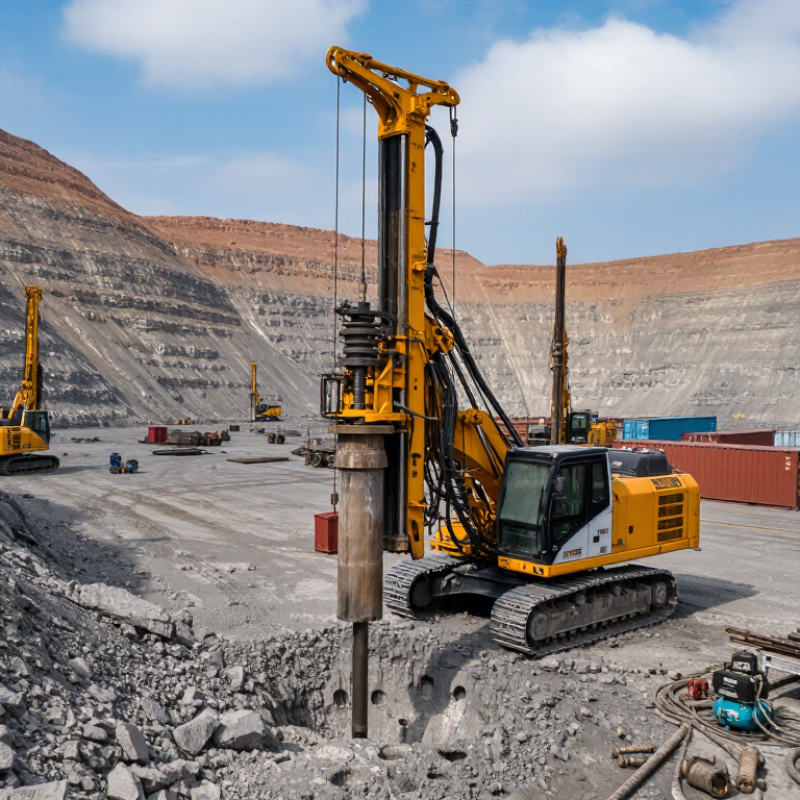
Who Are China Top DTH Boring Machine Manufacturers?

What Is a DTH Boring Machine and Where Is It Used?

A down-the-hole (DTH) boring machine drills with a pneumatic hammer positioned near the bit. Compressed air travels through the drill rods and drives repeated impacts at the rock face. This design transfers energy efficiently, especially in hard and abrasive formations. Cuttings return through the annular space around the rods. The operator can monitor drilling pressure, rotation speed, air volume, and penetration rate.

DTH machines are widely used for mining exploration, quarry blast-hole drilling, water wells, geothermal projects, and foundation investigation. On a quarry site, the rig may create straight holes through granite for controlled blasting. During water-well work, casing can stabilize loose ground while drilling continues. Geotechnical teams also use smaller rigs for anchor holes and site surveys. Their performance depends on rock strength, joint conditions, hole depth, and compressor capacity.

Not every ground condition suits DTH drilling. Soft clay can reduce cleaning efficiency, while fractured rock may cause air loss or unstable holes. Experienced crews adjust bit design, flushing pressure, and rotation speed instead of trusting factory settings. I have found that simple maintenance matters: worn threads, blocked air passages, or a damaged shank can quickly reduce accuracy. Noise, dust, and vibration also require careful control under local safety rules. Machine selection should include service support, documented testing, operator training, and realistic production data. Mistakes happen. Good manufacturers acknowledge them and improve the design.

How to Evaluate China’s DTH Boring Machine Manufacturers

Choosing a DTH boring machine manufacturer in China requires more than comparing online prices. A dependable supplier should explain drilling depth, rock hardness, air consumption, torque, and recommended hole diameter in practical terms. Ask for technical drawings and recent test records. Vague answers are a warning sign.

Visit the factory when possible. Observe machining areas, assembly benches, quality checkpoints, and spare-parts storage. Check whether critical components have traceable inspection records. Request evidence of material testing and final performance tests. Certifications matter, but they cannot replace production experience. A machine may meet a standard and still perform poorly in fractured rock.

Speak with customers using similar rigs in similar ground conditions. Ask about fuel use, bit life, breakdown frequency, and response time for replacement parts. Reliable manufacturers normally provide operator training, maintenance schedules, and clear warranty terms. Confirm which parts are made in-house and which are sourced externally. This affects repair speed.

Do not judge by appearance alone.

A polished showroom can hide weak engineering. I have found that detailed answers often reveal more than a low quotation. Still, no evaluation is perfect. Factory visits can be staged, and customer references may be selective. Use trial orders, acceptance criteria, and written performance targets to reduce uncertainty. Compare the machine’s total operating cost, not only its purchase price. Real field records should carry more weight than promises.

Leading Chinese Manufacturers of DTH Boring Machines

China’s leading DTH boring machine manufacturers combine drilling experience with increasingly precise factory control. Many serve mining, quarrying, water-well, and foundation contractors. Their product lines often include crawler-mounted rigs, compact models, and heavy-duty systems for fractured rock. Practical design matters more than polished brochures. Operators usually check feed force, compressor compatibility, rotation torque, and access width before purchasing.

Experienced Chinese manufacturers commonly use computer-controlled machining, pressure testing, and documented assembly procedures. Some suppliers also provide drill rods, down-the-hole hammers, spare seals, and remote technical support. These details reduce downtime at dusty, uneven sites. A reliable manufacturer should explain air consumption, drilling depth, hole diameter, and recommended maintenance intervals clearly. Vague specifications deserve questions.

Field experience still exposes weaknesses. Not every catalog figure survives hard granite, unstable ground, or poor site drainage. Buyers should request test records, component certificates, and references from comparable projects. Factory inspections can reveal assembly quality, parts organization, and the realism of promised delivery times. After-sales response is equally important. A machine may perform well, yet slow troubleshooting can stop an entire crew. Manufacturers that accept technical feedback usually improve faster, although their documentation may still contain translation errors or incomplete service notes. That imperfection should be addressed before a purchase agreement.

Who Are China Top DTH Boring Machine Manufacturers? - Leading Chinese Manufacturers of DTH Boring Machines

Evaluation Dimension Typical Commercial Range High-End Supplier Benchmark Why It Matters
Applicable drilling method Down-the-hole hammer drilling with compressed-air flushing Integrated DTH drilling system with adjustable air, rotation and feed controls Determines suitability for hard rock, quarrying, mining, anchoring and foundation work.
Typical hole diameter 90–305 mm 90–400 mm, depending on hammer and casing configuration Larger diameters require higher air volume, stronger feed systems and heavier tooling.
Maximum drilling depth 30–200 m under site-specific conditions Up to approximately 250 m with suitable rods, compressor capacity and ground conditions Actual depth varies with geology, borehole diameter, deviation control and flushing efficiency.
Drilling angle range Approximately 45°–90° or 90°–180°, depending on chassis design Multi-angle positioning with hydraulic mast adjustment Affects use in slope stabilization, blast-hole drilling and foundation applications.
Rotation speed 0–120 rpm Variable hydraulic rotation with torque matched to different rock formations Variable speed improves bit life and penetration control across changing formations.
Rotary torque 1,500–12,000 N·m Up to approximately 20,000 N·m on heavy-duty platforms Higher torque supports larger tools, casing advancement and fractured ground.
Feed force 20–80 kN Up to approximately 120 kN on heavy crawler rigs Adequate feed force helps maintain bit contact and stable penetration in hard rock.
Recommended compressor pressure 17–30 bar Up to approximately 35 bar for deep-hole or large-diameter drilling Pressure must match the DTH hammer design, depth and flushing requirements.
Compressed-air requirement 10–30 m³/min Approximately 30–40 m³/min for large tools and deep drilling Insufficient airflow can reduce penetration rate and leave cuttings in the hole.
Power configuration 75–250 kW diesel engine or equivalent electric-hydraulic system Approximately 250–350 kW for heavy-duty crawler platforms Power capacity influences compressor output, hydraulic performance and operating stability.
Chassis and mobility Crawler-mounted, truck-mounted or skid-mounted Crawler drive with independent leveling and remote-control options Mobility and leveling determine performance on uneven, restricted or steep terrain.
Rod length and connection 1.5–6 m rods; common thread sizes selected by hammer and hole diameter Automatic rod changer with compatible DTH and casing systems Rod handling affects drilling cycle time, operator safety and achievable depth.
Dust-control system Dry dust collector, water injection or optional mist suppression High-efficiency filtration with automatic cleaning and adjustable water injection Effective dust control improves visibility, equipment life and compliance with site regulations.
Automation and monitoring Manual hydraulic controls with basic pressure gauges Digital monitoring of feed pressure, rotation, compressor status and drilling depth Monitoring supports consistent drilling quality, preventive maintenance and lower downtime.
Common application sectors Mining, quarrying, water wells, geotechnical drilling, anchoring and blasting Multi-purpose configuration with interchangeable hammers, bits and casing tools Application flexibility can reduce the need for separate machines across different projects.
Export-readiness indicators CE documentation, English manuals, spare-parts lists and standard electrical options Documented quality system, international service support and tested hydraulic/electrical components Documentation and after-sales support are essential for overseas installation and operation.

Note: The figures are representative industry ranges for DTH drilling and boring equipment. Actual performance depends on rock hardness, borehole diameter, tooling, compressor selection, operator skill and site conditions.

How Chinese DTH Boring Machine Brands Compare

Chinese DTH boring machine manufacturers differ greatly in engineering depth, factory control, and export experience. The strongest suppliers often integrate drilling rigs, compressors, hydraulic systems, and down-hole tools. This improves compatibility at remote work sites. Their equipment commonly serves quarrying, foundation construction, water wells, and mining support. However, high production volume does not always indicate superior performance. Field reliability matters more.

Some established manufacturers focus on heavy crawler rigs for hard rock and demanding construction schedules. Others offer compact machines for narrow roads, small foundations, or limited working areas. Mid-range suppliers may provide attractive prices, but component quality and testing standards require careful verification. In practical evaluations, buyers should examine drilling speed, fuel use, vibration control, rod alignment, and compressor stability. A clean brochure proves little.

After-sales service is another important difference. Reliable suppliers provide spare-parts planning, operator training, remote troubleshooting, and clear warranty terms. Ask for inspection records and recent working references. A machine should start smoothly on cold mornings and maintain pressure during long drilling cycles. No supplier gets every detail right. Even capable manufacturers may overlook local soil conditions or transport limits. Independent testing remains worthwhile before a large purchase.

How to Choose the Right Chinese DTH Boring Machine Manufacturer

Choosing the right Chinese DTH boring machine manufacturer requires more than comparing prices. Start with your ground conditions, bore diameter, rock hardness, drilling depth, and required production rate. A capable manufacturer should explain how its machine fits these details. Ask for technical drawings, performance data, and a clear list of standard components.

Experience matters. Review factory qualifications, production equipment, quality inspection records, and recent export cases. Request videos of machines operating in similar rock formations. Speak with previous buyers when possible. Check whether the manufacturer tests key parts before shipment, including the hydraulic system, drill head, compressor connection, and control panel. Certification helps, but it does not replace practical evidence. One overlooked issue can become an expensive delay.

Tips: Compare total ownership cost, not only the purchase price. Confirm spare-parts availability, operator training, warranty terms, and response time. Ask who handles troubleshooting after installation. Put every promise into the contract. Also, test communication carefully; unclear technical language may cause mistakes later. A sample machine trial is valuable, although it may not perfectly represent your site. Leave room for that uncertainty. Good suppliers welcome detailed questions and admit limitations. Their answers should be specific, measured, and supported by records rather than attractive claims.