How to Choose the Best Bathtub Floor Faucet
Choosing a Bathtub Floor Faucet is about more than matching a finish to your tub. The faucet must reach comfortably over the rim, clear nearby walls, and work with the plumbing beneath the floor. A spout that looks elegant in a showroom may splash outside a shallow tub or feel awkward beside a deep freestanding model. Small measurements matter.
This guide explains how to compare faucet height, spout reach, handle placement, materials, and installation requirements. Check the manufacturer’s specifications against your tub dimensions before you buy. Also confirm that the subfloor can support the faucet and that the water lines can reach its location. A licensed plumber can assess those details, especially during a renovation or when pipes need to move. It is easy to overlook access for future repairs. Don’t skip it.
Your daily routine matters, too. A hand shower can help with rinsing, but its hose should reach comfortably without dragging across the floor. Solid brass bodies and durable finishes may offer long-term value, though care requirements vary by product. Compare the warranty and cleaning instructions rather than relying on appearance alone. No single design suits every bathroom, and even careful planning involves trade-offs. The goal is a faucet that fits the tub, the room, and the way you actually bathe—not simply the most striking fixture on display.
Identify the Bathtub Floor Faucet Style and Configuration You Need
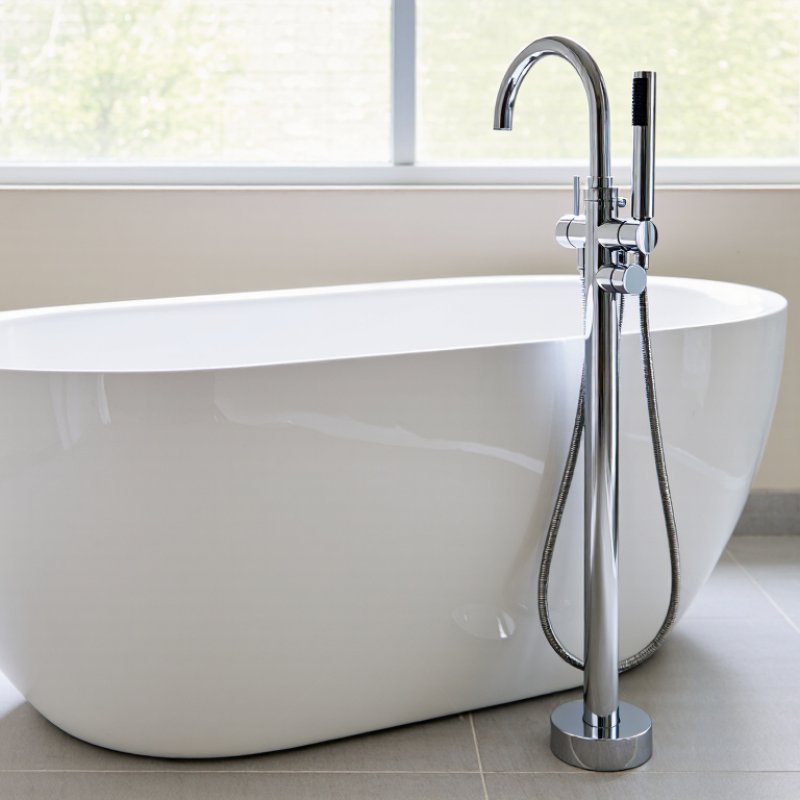
A floor-mounted bathtub faucet can be a slim, single-post filler or a more substantial set with separate handles. Some configurations include a hand shower, useful for rinsing the tub or washing hair. Decide which features you will actually use before choosing a silhouette. Looks matter. A tall, sculptural faucet may suit a freestanding tub, while a compact design can feel less imposing in a smaller bathroom.
Check the tub’s position and the faucet’s spout reach together. The water should land inside the basin, not splash against its rim. Measure from the planned floor outlet to the tub edge, and confirm the faucet height clears the tub wall. A hand shower also needs enough hose length to reach comfortably. Small measurements, big consequences.
Floor-mounted faucets require plumbing connections through the floor, so the rough-in location matters before installation. Confirm it works with the tub’s drain, nearby joists, and the intended faucet configuration. A plumber can verify clearances before the floor is finished. I would not choose by finish alone; a beautiful faucet can be awkward if its handles are hard to reach. This is easy to overlook. Compare handle placement, spout direction, and shower controls in a layout or showroom, then check the product’s installation requirements against your actual room.
How to Choose the Best Bathtub Floor Faucet
Identify the Bathtub Faucet Style and Configuration You Need
How to read this chart: Each bar marks the primary mounting surface for that faucet style (1 = typical mounting surface; 0 = not the primary mounting surface). Floor-mounted fillers need floor access, wall-mounted fillers need wall access, and deck-mounted fillers attach to the tub rim or a nearby deck. Check your bathroom’s plumbing access and tub configuration before choosing.
Check Bathroom Layout, Tub Placement, and Plumbing Compatibility
How to Choose the Best Bathtub Floor Faucet
Start with the room, not the faucet. Measure the tub’s length and width, then mark its final position on the floor. A freestanding tub may look centered while leaving too little space to clean behind it. Check door swings, drawers, and walking paths, too. Small clearances matter.
Next, compare the faucet’s reach with the tub’s rim and drain location. The spout should deliver water into the basin, not onto the edge or floor. Measure from the planned faucet position to the tub’s inner wall. Check handle clearance as well; a handle can hit a nearby wall or tub. These details are easy to miss on a sketch.
Plumbing compatibility needs attention before flooring is finished. Confirm where hot and cold supply lines can rise through the floor, and whether the subfloor can support the faucet assembly. Some installations need added blocking or a service-access route. Ask a qualified plumber to verify the rough-in dimensions and local requirements. A drawing may look precise, yet site conditions can disagree. Check twice before cutting. If the tub or faucet position changes, recheck the pipe locations and spout reach rather than relying on the original measurements.
Compare Faucet Materials, Finishes, and Water-Control Features
A floor-mounted bathtub faucet is exposed, so its material and finish affect durability and the room’s visual balance. Solid brass is often chosen for strength and corrosion resistance, though quality varies by alloy and construction. Stainless steel offers a clean, modern look and good durability, while plated materials may need gentler care. I learned that late. Water spots showed more clearly on a polished finish than on a brushed one.
Choose a finish that suits your cleaning habits, not just the tile color. Chrome is easy to match and wipe, but fingerprints and mineral marks can show. Brushed or matte finishes soften reflections, though textured surfaces may hold residue around seams. Water control matters, too. A single-handle mixer adjusts temperature quickly; separate controls allow finer adjustment but add steps. Check that the spout reaches comfortably over the tub, and ask an installer about floor support, access, and service clearance. Looks matter.
Tips: Turn the handle through its full range before buying, and check the stated flow rate. If your water is hard, look for clear finish-care instructions. Small detail.
Review Installation Requirements, Durability, and Maintenance
A floor-mounted bathtub faucet needs more than an attractive spot beside the tub. Check that the floor can support its weight and that hot and cold water lines can reach the planned location. Confirm the faucet’s rough-in dimensions before tile or flooring is installed; moving a pipe later can mean opening finished surfaces. Measure twice. Leave enough space to clean around the base and operate the handles without bumping the tub. A layout can look perfect on paper, yet feel cramped once the tub is in place.
Durability depends on the faucet’s construction and the conditions in your bathroom. Moisture collects near the floor, so look for corrosion-resistant materials and a finish that tolerates regular wiping. Ask whether the cartridge and other wear parts can be replaced without removing the whole fixture. Small parts matter. After installation, run the water and inspect each connection for leaks, then check again after several days. For routine care, use a soft cloth and mild soap; abrasive pads can dull some finishes. One easy-to-miss detail is access to the plumbing connections. If a leak develops, limited access may turn a small repair into a larger job, so plan for service before the floor is closed.
Balance Price, Warranty, and Quality Before Choosing a Faucet
A floor-mounted bathtub faucet is a long-term fixture, so compare more than its sticker price. Houzz’s 2024 U.S. Bathroom Trends Study reported a median spend of $15,000 for major bathroom remodels in 2023. That figure covers the room, not the faucet, but it shows why a small saving can matter less than avoiding a costly replacement. Check whether the price includes the rough-in valve, hand shower, and installation parts; these can change the real cost.
Warranty details reveal what the price may not. Read the written terms for cartridge and finish coverage, exclusions, and whether labor or replacement shipping is included. Then check that replacement parts are available and that a plumber can reach the connections after installation. Quality is also practical: confirm the faucet suits your water pressure, has a stable floor-mounting base, and uses materials suited to regular bathroom use. A heavy-looking body is not proof of durability. I would still compare the specifications, not just the finish.
Tips: Before buying, measure the tub’s rim height and faucet reach. Keep the warranty and installation instructions together. A little awkward, perhaps, but useful later.