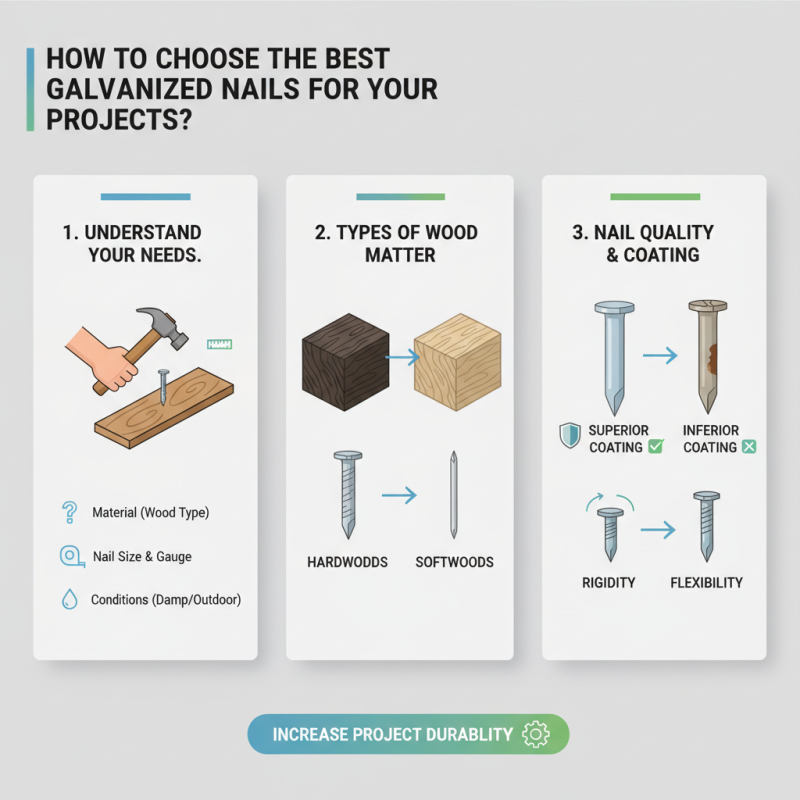
How to Choose the Best Galvanized Nails for Your Projects?
When embarking on a DIY project, choosing the right materials is crucial. Galvanized nails play a significant role in your project's success. These nails are coated with zinc to prevent rust. This feature makes them ideal for outdoor use or in damp conditions.
Selecting the best galvanized nails involves understanding your specific needs. Are you working with wood? What is the nail size? Perhaps you need a specific gauge for your project. Sometimes, the wrong choice can lead to frustrating results. Consider the type of wood as well. For instance, hardwoods may require a stronger nail than softer woods.
Furthermore, not all galvanized nails are created equal. Some may be more rigid, while others might bend more easily. Pay attention to the coating quality as well. Inferior galvanized nails can lead to issues down the line. Taking the time to evaluate these factors will enhance your project’s durability.
Understanding Galvanized Nails: What Makes Them Different?
Galvanized nails are essential for various construction and woodworking projects. Their unique coating is a key differentiator. This protective layer, typically made of zinc, prevents rust and corrosion. According to industry reports, galvanized nails have a lifespan three to four times longer than standard steel nails in outdoor conditions. The coating's thickness plays a significant role. Thinly coated nails may not offer the same level of protection, leading to premature failure.
When choosing galvanized nails, consider the environment. Not all galvanized nails are created equal. Some are hot-dipped, providing a thicker coating. Others are electro-galvanized, which can be adequate for indoor projects but unsuitable for moisture-rich areas. A recent study indicated that using hot-dipped galvanized nails in coastal installations increases their longevity by up to 60%.
It's also important to note that using mismatched gauge sizes can lead to structural issues. If the nails are too large, they can split the wood. Conversely, nails that are too small might not hold tightly. Awareness of these potential pitfalls can enhance project quality. Make informed choices based on your specific needs to avoid costly mistakes.
Key Factors to Consider When Choosing Galvanized Nails
When choosing galvanized nails, several key factors come into play. The coating thickness is crucial. A thicker zinc layer offers better corrosion resistance. The American Society of Testing and Materials (ASTM) recommends a minimum of 1.25 ounces of zinc per square foot for greater durability. Consider the intended use as well. Exterior projects often require more robust choices compared to indoor applications.
Nail gauge is another important aspect. Common gauges range from 16 to 18. Thicker nails, such as 16-gauge, provide better holding power. In contrast, 18-gauge nails might be suitable for lighter materials. You may need to adjust your choice based on the project material's density, as some applications may not hold up well with thinner nails.
Pay attention to the nail design as well. Common designs, such as smooth shank or spiral shank, offer varied holding capabilities. Spiral shank nails, for example, provide more grip but require more force to install. Additionally, some users experience difficulties with certain designs, leading to potential installation issues. Ultimately, selecting the right galvanized nail requires careful consideration of these factors. Each project presents unique challenges. Adjusting expectations and experimenting can lead to better outcomes.
Comparison of Galvanized Nails Based on Different Specifications
Different Types of Galvanized Nails and Their Uses
When working on various projects, understanding the types of galvanized nails available is essential. Galvanized nails are coated with zinc to prevent rust. This feature makes them ideal for outdoor use. There are several kinds of galvanized nails on the market today. Common types include Common Nails, finishing nails, and roofing nails. Each serves a specific purpose.
Common nails are versatile. They are used in framing and general construction. Their thick shank provides strength, making them suitable for heavy-duty tasks. Finishing nails are smaller and have a thinner profile. These nails are perfect for trim work and cabinetry, as they leave a smaller hole to fill. Roofing nails, on the other hand, have a larger head. They secure shingles and other roof materials effectively.
While these nails are practical, choosing the right one can be challenging. Not all projects require the same type of nail. Sometimes, a common nail may not be strong enough for specific tasks. A finishing nail might split the wood if used improperly. Reflecting on your project’s needs is crucial. It’s important to assess which nail type complements your work best. This way, you can avoid mishaps in your projects and ensure durability.
How to Assess the Quality and Durability of Galvanized Nails
When assessing the quality and durability of galvanized nails, consider several key factors. The thickness of the coating determines the nail's corrosion resistance. A thicker layer of zinc offers better protection against rust. Look for nails with a minimum of 1.5 mils of coating thickness. This can extend their lifespan, especially in outdoor projects.
Another aspect to examine is the manufacturing process. Some nails go through hot-dip galvanizing, while others use electroplating. Hot-dipped nails typically have a more robust coating. However, they may have inconsistencies in the finish. Be mindful of these details when selecting your nails.
Tips: Always check the specifications on the packaging. Look for signs of rust or corrosion before use. If nails appear damaged, reconsider your choice. Quality matters, especially in projects exposed to the elements. Remember to research and compare options. A little extra effort can lead to better results. Your choice can affect not only appearance but also durability and performance.
Tips for Properly Storing and Handling Galvanized Nails during Projects
When working on any project, storing and handling galvanized nails properly is crucial. Improper storage can lead to rust, damaging your nails and ruining your work. Keep nails in a cool, dry place to prevent moisture from affecting them.
Tips: Regularly check your storage conditions. If nails show signs of rust or corrosion, discard them immediately. Use airtight containers to keep out humidity.
While working, avoid dropping nails on hard surfaces. This can create dents, making them less effective. If you find bent nails, it's worth considering their usability before proceeding. Take time to inspect each nail. Quality control can save you from headaches later on.
Ultimately, maintaining your nails during projects leads to better results. Keep in mind that neglecting proper care can result in additional costs and wasted materials. It's better to invest time in handling nails right from the start.
How to Choose the Best Galvanized Nails for Your Projects? - Tips for Properly Storing and Handling Galvanized Nails during Projects
| Type of Galvanized Nail | Common Uses | Recommended Size (Inches) | Storage Recommendations | Handling Tips |
| Common Nail | Framing, general construction | 2 | Keep in a dry, cool place. | Wear gloves to prevent hand injuries. |
| Roofing Nail | Installing roofing shingles | 1-1/4 | Store in original packaging to avoid moisture. | Use a nail gun for efficiency. |
| Decking Nail | Installing decks and fences | 2-1/2 | Store in a ventilated area. | Keep nails organized to avoid confusion. |
| Finish Nail | Trim work, cabinetry | 1-1/2 | Keep in a cool and dry location, away from direct heat. | Use a hand nailer for precision. |