How to Choose the Best Silent Diesel Generator for Your Needs?
Choosing the right silent diesel generator is crucial for many applications. In 2021, the global silent diesel generator market was valued at $3 billion and is expected to grow steadily. This growth reflects a strong demand for quiet power solutions in various sectors, including construction and emergency backup.
Industry expert Dr. James Porter emphasizes the importance of choosing wisely: "A silent diesel generator should not only meet power needs but also minimize noise pollution." Many users overlook this aspect, focusing solely on output. However, the noise factor can impact nearby environments and communities.
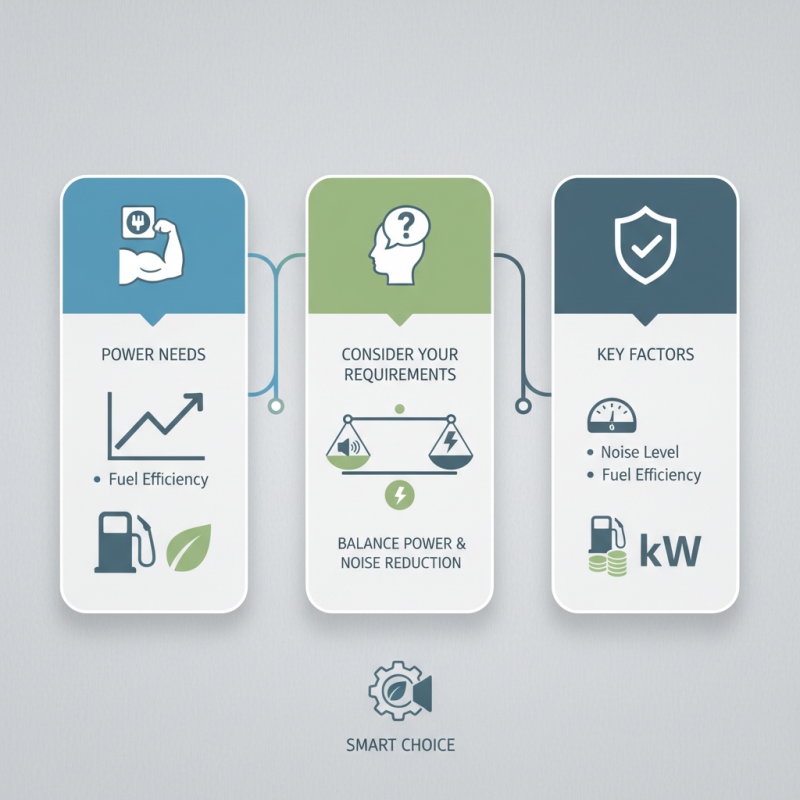
When selecting a silent diesel generator, you must consider your specific requirements carefully. The generator's capacity, fuel efficiency, and noise level are all critical factors. Unfortunately, many buyers neglect to assess these aspects thoroughly, leading to poor performance or frustration later. Balancing power needs with noise reduction is key to making a smart choice.
Understanding the Basics of Diesel Generators
Diesel generators are popular for their efficiency and reliability. They convert diesel fuel into electrical energy. Understanding the basics helps in making an informed decision.
A silent diesel generator operates quietly, making it suitable for residential areas. Noise levels often range between 50 to 70 decibels. This is significantly quieter than traditional generators. However, some models might still produce unexpected noise. It's essential to check the specifications carefully.
Choosing the right generator involves understanding power output. Assess your needs based on the appliances you intend to power. Consider starting wattage versus running wattage. Sometimes, users underestimate their requirements. Regular maintenance is also crucial. Without it, even the best generators can face issues.
Identifying Your Power Needs and Usage Requirements
When choosing a silent diesel generator, understanding your power needs is crucial. Start by assessing the total wattage required to run your appliances and equipment. Consider everything from lights and refrigerators to power tools. An easy way to gauge this is to list your essential devices and their wattage ratings. This helps avoid the mistake of underestimating your needs.
It’s also important to think about how long you’ll be using the generator. Are you looking for a steady power supply during outages, or is it for occasional use? Longer run times may need bigger fuel tanks and better efficiency. But remember, larger generators can be noisier. Reflect on whether the peace of a silent generator is worth potential limitations in power output.
Don't forget to evaluate the environment where you’ll be using it. Noise limitations may restrict your options in urban areas. You might find that some models run quieter than others. Yet, if your focus is on ample power, some trade-offs could be necessary. It’s all about finding that balance between your needs and practical solutions.
Evaluating Noise Levels and Choosing Silent Models
When selecting a silent diesel generator, noise levels are a critical factor. Many users prefer engines rated under 60 decibels. This threshold is equivalent to a quiet conversation. A quieter generator ensures minimal disturbance, especially in residential or sensitive environments.
Recent industry reports reveal that noise can significantly impact user satisfaction. According to a 2021 survey, 75% of customers noted that noise levels influenced their purchasing decisions. Furthermore, generators operating in the 50-55 decibel range are increasingly favored. These models usually come equipped with advanced soundproofing features.
However, achieving a balance between power output and noise reduction often poses challenges. Some users may find that quieter models sacrifice performance. It's crucial to review technology specifications. A silent generator should meet your power demands without excessive noise. Think carefully about where you plan to use it. Indoor or close-quarter applications require lower noise models for comfort and compliance.
Assessing Fuel Efficiency and Runtime for Diesel Generators
When selecting a silent diesel generator, fuel efficiency and runtime are crucial factors. A generator's fuel efficiency impacts operational costs significantly. According to a recent industry report, an average diesel generator consumes about 0.5 to 0.6 liters of fuel per kWh of electricity produced. Evaluating energy needs against this data can guide decisions effectively.
Runtime also plays a vital role. Many diesel generators can operate continuously for 8 to 12 hours on a full tank. If your application requires extended use, look for generators with larger fuel tanks or models that allow for easy refueling. A design that enables quick refuel can minimize downtime during critical tasks.
Tip: Regular maintenance is essential. A well-maintained generator runs more efficiently. Clean air filters and regular oil changes can enhance fuel efficiency by up to 10%. Another consideration: noise levels. Even silent models can produce noise that affects surroundings. Test the sound levels before making a purchase. Consider where the generator will be used. You want it to perform well but also respect your environment.
Considering Maintenance and Support Options for Longevity
When considering a silent diesel generator, maintenance is crucial for longevity. Regular upkeep can extend the lifespan of your generator significantly. According to the Energy Information Administration, proper maintenance can improve efficiency by up to 25%. This directly impacts fuel consumption and overall costs.
Support options also play a critical role. Access to skilled technicians helps resolve issues quickly. A survey from the Generator Manufacturers Association shows that 40% of generator failures occur due to poor maintenance. Identifying a service provider with a solid reputation can be a game-changer. They should offer not only repairs but also proactive maintenance services.
Think about replacement parts as well. Availability affects downtime. A reliable generator should have easily accessible components. However, some manufacturers may not stock enough supplies. This can lead to long waits when an issue arises. Regular check-ups can mitigate these risks. Routine inspections catch problems early, saving time and money. Prioritizing maintenance is key to ensuring a silent diesel generator serves your needs effectively.