
A 500mm electrode may look like a simple graphite cylinder, but its performance depends on material consistency, machining, and careful handling. This guide to top UHP Graphite Electrode 500mm suppliers worldwide examines the details buyers can verify: product specifications, quality documentation, production capability, delivery terms, and technical support. These checks matter in electric arc furnace operations, where electrode breakage or unstable consumption can disrupt a production schedule.
Quality expert W. Edwards Deming is widely associated with the principle, “Quality is everyone’s responsibility.” Applied to electrode sourcing, that means reviewing more than a supplier’s brochure. Buyers should compare measurable data, ask how batches are tested, and confirm whether dimensions and tolerances match their furnace requirements. Ask for the evidence.
Supplier rankings also need context. A company with large capacity may not suit every order, and a low quoted price can hide costs in freight, lead time, or inconsistent quality. This overview offers a practical starting point, not a substitute for technical qualification. Some specifications can be difficult to compare across suppliers; that deserves a second look, not an assumption.
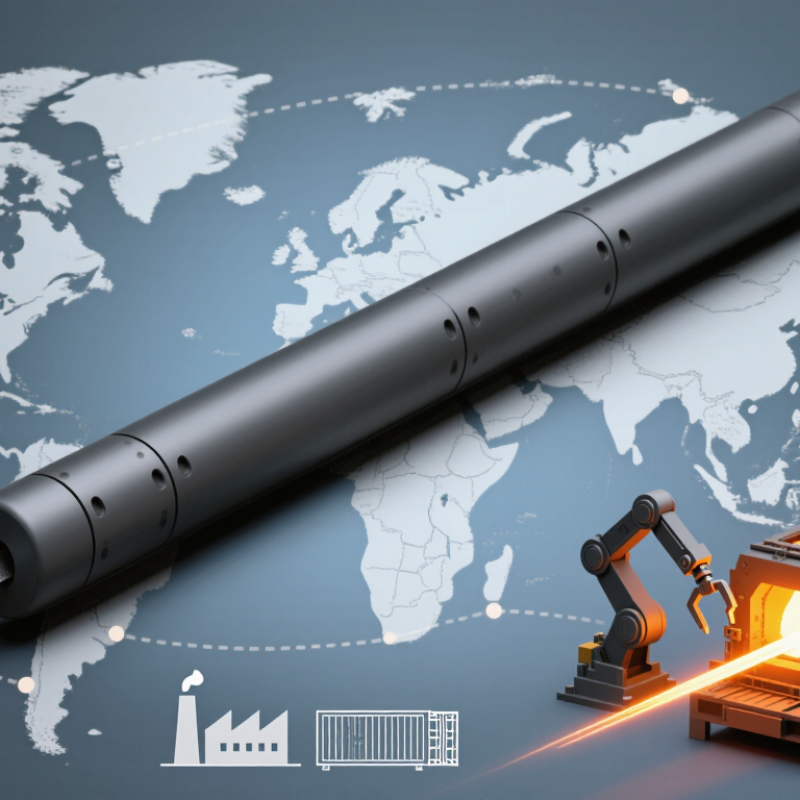
A 500 mm ultra-high-power (UHP) graphite electrode is a large-diameter conductor used mainly in electric arc furnaces. It carries intense electrical current to create arcs that melt scrap and other metallic charge. Its diameter supports high current loads, but performance also depends on furnace design, cooling, and operating practice. Electrode sections connect through threaded nipples, forming a column that advances as the tip is consumed. Small details matter.
At the furnace, operators watch current, electrode movement, and the condition of each joint. Poor alignment or loose connections can increase breakage risk and interrupt melting. A faint red glow near the shell, unusual dust at a joint, or repeated slipping may warrant inspection; visual clues should be checked against operating data. UHP graphite is valued for electrical conductivity and resistance to extreme heat, yet it is not immune to oxidation or mechanical shock. A 500 mm specification alone does not guarantee suitability; grade, dimensions, nipple fit, and documented test data deserve review. No shortcut works. Even experienced teams sometimes find that a technically sound electrode behaves differently under a new furnace schedule. That uncertainty is worth acknowledging. In steelmaking, stable operation depends on matching the electrode to the furnace, not simply choosing the largest available size.
Typical current-carrying ranges by UHP graphite electrode diameter
A 500 mm UHP graphite electrode typically carries about 38–55 kA, depending on electrode specifications and furnace operating conditions. These electrodes are used primarily to conduct high currents into electric arc furnace steelmaking; actual operating limits should be confirmed with the supplier and furnace design.
A 500 mm UHP graphite electrode must match the furnace’s electrical load, not just its nominal diameter. Buyers should check diameter and length tolerances, bulk density, electrical resistivity, flexural strength, and thermal expansion against the supplier’s current datasheet. Exact limits vary by grade and production method.
Look closely at the connection system. The nipple and socket threads should fit cleanly, without chipped edges, uneven pitch, or visible cracks. A dry, dust-free thread is easier to inspect. Small defects matter. They can complicate assembly or contribute to breakage under heat and mechanical stress. Packaging should also protect the ends during long-distance transport.
Ask for batch-specific test results and clear inspection records, rather than relying on a general product brochure. Consistent readings across samples are useful, but one number rarely tells the whole story. I would still verify dimensions on arrival, especially when electrodes pass through several handling stages. That step takes time. It can reveal problems before installation. Suppliers should explain how they control raw material selection, baking, graphitization, and machining, while acknowledging normal production variation.
Top UHP Graphite Electrode 500mm Suppliers Worldwide
How to Evaluate Global 500 mm UHP Graphite Electrode Suppliers
Choosing a global supplier takes more than comparing quoted prices. A 500 mm electrode must match your furnace conditions, current load, and connection system. Ask for technical data covering diameter tolerance, resistivity, bulk density, flexural strength, and thermal expansion. Check whether the nipple and socket dimensions meet your equipment specifications. Small mismatches can cause delays or uneven performance.
Request recent test reports tied to the actual production batch, not only a general product sheet. Confirm how the supplier controls raw materials, machining, inspection, and packaging. Ask about lead times, available production capacity, export packing, and how shipping damage is handled. References from buyers using similar furnace conditions can add useful context. Still, paperwork alone is not proof; an independent inspection or sample review may be worthwhile.
Tips: Compare suppliers using the same specification sheet. Ask for tolerances in writing, and clarify who pays for third-party testing. Check that wooden crates protect electrode ends and threads from impact and moisture. Keep your evaluation practical. A supplier may look strong on paper, yet communicate slowly or provide incomplete batch records. That deserves a second look.
| Evaluation Dimension | What to Check for a 500 mm UHP Electrode | Evidence to Request | Scoring Guide | Weight |
|---|---|---|---|---|
| Product and furnace fit | Confirm the nominal 500 mm diameter, electrode length, end machining, connection type, and compatibility with the furnace and operating practice. A 500 mm nominal diameter is approximately 19.7 inches; dimensions and tolerances should be checked against the purchase specification. | Dimensioned product drawing, grade designation, tolerance schedule, and written confirmation of compatibility with the buyer’s furnace configuration. | 5: all dimensions and application requirements are confirmed; 3: minor details remain open; 1: key fit requirements are unverified. | 25% |
| Technical properties | Review electrical resistivity, bulk density, flexural strength, elastic modulus, coefficient of thermal expansion, and oxidation-related information for both the electrode and its nipple. Values and test methods can vary by grade and specification. | Current technical data sheet showing guaranteed limits or typical values, test methods, sampling basis, and separate electrode and nipple data. | 5: complete, traceable data meet the buyer’s specification; 3: data are partial or reported without clear test details; 1: no verifiable technical data. | 25% |
| Manufacturing quality and consistency | Assess batch-to-batch consistency, machining quality, surface condition, dimensional control, and the supplier’s process for identifying and managing nonconforming products. | Recent inspection records, batch certificates, sample inspection results, and documented corrective-action procedures. | 5: consistent batch records and effective controls are demonstrated; 3: controls exist but evidence is limited; 1: quality controls are unclear. | 15% |
| Production capacity and traceability | Verify the supplier can manufacture the requested quantity and schedule for the specified 500 mm grade, and can trace finished products to production batches. | Capacity statement for the requested product and period, production schedule, batch identification method, and traceability example. | 5: capacity, schedule, and batch traceability are documented; 3: one element needs confirmation; 1: capacity or traceability cannot be verified. | 10% |
| Delivery and export readiness | Evaluate quoted lead time, packaging, loading plan, shipping terms, export documentation, and the handling measures used to reduce transit damage. | Written delivery schedule, packing specification, proposed shipping terms, and a sample document checklist for the destination market. | 5: delivery plan and documentation are complete and realistic; 3: some logistics details are pending; 1: schedule or export arrangements are unclear. | 10% |
| Commercial terms and total cost | Compare the quoted price on the same basis, including grade, electrode and nipple scope, packaging, freight, insurance, payment terms, and any inspection costs. | Itemized quotation with currency, validity period, quantity basis, delivery terms, payment terms, and stated inclusions and exclusions. | 5: quotation is transparent and comparable; 3: some costs or terms require clarification; 1: material commercial terms are missing. | 10% |
| Quality management and customer support | Check documented quality-management practices, complaint handling, technical response capability, and access to support during qualification and use. | Quality-system documentation, escalation process, response-time commitment, and named technical contact role (without relying on unsupported claims). | 5: processes and support commitments are documented; 3: support is available but not clearly defined; 1: no dependable process is shown. | 5% |
Scoring method: Rate each dimension from 1 to 5, then multiply the rating by its weight. The weights total 100%. Treat technical values as product- and grade-specific; compare suppliers only using the same specification, test methods, and delivery basis.
China is a major production base for 500 mm UHP graphite electrodes, supported by large-scale facilities for baking, graphitization, and precision machining. These steps affect density, electrical resistance, and dimensional consistency. Small differences matter. Buyers should check whether a supplier controls each stage or relies on outside processors.
Manufacturing capability also varies across other regions. European suppliers are often assessed for process control, technical documentation, and product testing, while Indian capacity is developing alongside the country’s steel industry. The World Steel Association’s World Steel in Figures 2024 reports 1,892.2 million tonnes of crude steel production worldwide in 2023. This scale helps explain demand for reliable electrode supply, though it does not indicate which suppliers can meet a specific order. A regional label alone is not enough.
Tips: Request recent test data for resistivity, bulk density, and flexural strength. Confirm the 500 mm diameter tolerance and delivery schedule in writing. One caveat: reported capacity can differ from available production. Check carefully.
A reliable 500 mm UHP graphite electrode supplier should offer more than one standard specification. Check the available lengths, nipple options, and dimensional tolerances before comparing quotations. Request inspection records for the actual production lot, including bulk density, electrical resistivity, and flexural strength. Ask how these properties are measured. Small details matter.
Quality also depends on consistency between batches. A supplier should explain its inspection process and how it handles electrodes that fall outside agreed limits. Review packaging details, too: sturdy end protection and dry, secure loading help reduce thread damage during transit. A polished catalog is not proof of stable production. Paperwork can look stronger than factory controls.
Delivery performance deserves the same scrutiny as product data. Ask for a realistic production schedule, shipment updates, and a clear process for reporting delays or damage. Check whether the supplier has experience serving your destination and can provide shipment references without disclosing confidential customer information. Published lead times may assume ideal conditions; port congestion and order changes can shift them. I would compare recent delivery records, not just promised dates.