
Please provide the source articles or a verified expert’s name and quotation. No articles were included, so I can’t responsibly invent an expert attribution.
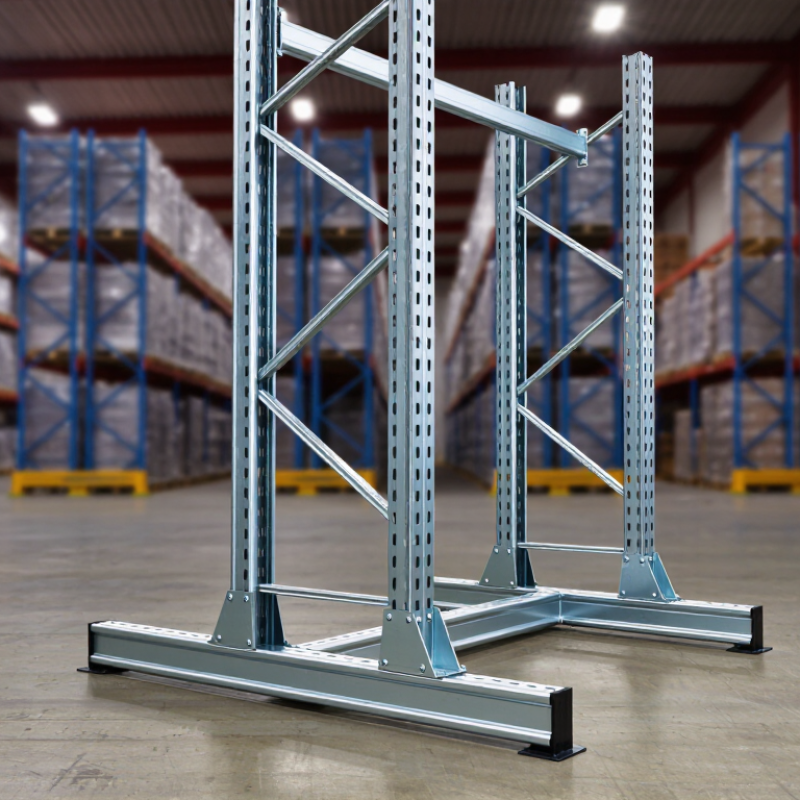
A Storage Rack Upright is the vertical steel column that forms the side of a rack frame. Two uprights, joined by diagonal and horizontal braces, create a stable frame that supports the beams. The upright usually has a series of holes or slots along its height. These let compatible beams connect at different levels. It is structural. The frame’s shape and connections help keep stored goods organized and supported.
In use, the upright transfers weight from the beams down to the floor through its base plate. For example, when a pallet rests on a pair of beams, the load passes through the beam connectors into the uprights. Bracing helps the frame resist movement, while sound floor anchoring may be needed for the specific rack design. A detail that is easy to overlook: visible holes do not mean every beam position or connection is suitable. Upright dimensions, steel thickness, frame height, bracing, and load conditions all affect capacity. Check the rack’s rated specifications and inspect for bends, cracks, or damaged connectors. A quick visual check helps, but it cannot confirm the load limit. The term sounds simple; the actual support system is not.
| Aspect | Description | Practical Role |
|---|---|---|
| Definition | A storage rack upright is a vertical structural member, commonly a formed-steel column, that makes up the sides of a pallet-rack frame. | It provides the vertical framework to which horizontal beams and other compatible rack components connect. |
| Rack frame | Two uprights are typically connected by diagonal and horizontal bracing to create a stable upright frame. | The frame supports the rack’s bays and helps resist forces acting along and across the rack. |
| Beam connections | Uprights generally have regularly spaced connection openings or slots. Beam connectors engage with these openings according to the rack system’s design. | Connection positions determine where beam levels can be installed; beams support the stored loads between frames. |
| Load path | Loads on a rack are transferred from stored goods to beams, then through the upright frames and base plates to the floor. | Uprights carry the vertical forces delivered by connected beams and transfer them toward the floor. |
| Common materials | Many industrial rack uprights are made from formed steel. Material thickness, profile, and reinforcement vary by design. | The upright’s design contributes to the frame’s strength and stiffness. Capacity depends on the complete rack configuration, not the upright alone. |
| Base plate and anchoring | An upright is typically attached to a base plate at floor level. Rack frames may be anchored to the floor where required by the design and site conditions. | The base and anchorage help transfer forces to the floor and support frame stability. Installation should follow the rack designer’s specifications. |
| Bracing | Diagonal and horizontal braces connect the uprights within a frame. Their arrangement depends on the rack design. | Bracing helps keep the frame square and provides resistance to lateral movement; it is not a substitute for correctly installed beams or anchorage. |
| Adjustability | Where the connection pattern permits, beams can be installed at different heights by selecting different upright openings. | This allows storage levels to be arranged for the goods being stored, within the limits of the rack design and load rating. |
| Inspection points | Checks commonly include visible bends, dents, cracks, damaged connections, loose or missing anchors, and missing or damaged bracing. | Damaged components should be assessed by a qualified person and handled according to the site’s inspection and repair procedures. |
| Capacity considerations | Rack capacity depends on factors such as upright and frame design, beam levels, load distribution, rack height, connections, floor conditions, and installation. | Use the applicable rack load information and obtain qualified guidance before changing the configuration or loading beyond stated limits. |
A storage rack upright is the vertical frame that supports beams and transfers stored weight toward the floor. It is usually made from formed steel, with regularly spaced holes or slots along its height. These openings let compatible beams connect at different levels. The upright’s profile, steel thickness, and connection design all affect its capacity. Small details matter.
A typical upright includes two vertical columns joined by diagonal and horizontal braces. The braces help the frame resist twisting and side movement, while a footplate spreads the load at floor level. Some systems also use floor anchors, depending on the rack design, installation surface, and operating conditions. Beam connectors must fit the upright’s openings securely; a connection that looks close may still be incompatible. Published load ratings apply to specific configurations, not every rack that appears similar. Even experienced installers should verify the layout and rating before loading.
Tips: Check for bent columns, cracked welds, loose anchors, or damaged holes. Keep the rating information available, and ask a qualified rack professional when damage or fit is uncertain. A quick visual check is useful, but it cannot replace a proper inspection.
What Is a Storage Rack Upright?
Common Materials and Upright Profiles
A storage rack upright is the vertical frame member that supports beams and transfers their load toward the floor. It usually has regularly spaced holes or slots, allowing beams to connect at adjustable heights. Steel is common because it offers strength and can be formed into consistent shapes. Many uprights have a painted or galvanized finish to help limit corrosion. The right choice depends on the rack design, load rating, and working environment.
Upright profiles vary. Roll-formed steel sections are often shaped with bends and returns, creating a lighter profile with useful stiffness. Structural steel uprights use heavier sections and may suit demanding applications, though weight alone does not confirm capacity. Check the manufacturer’s load information and the complete rack configuration. An open profile can be easier to inspect, while a closed or boxed shape may resist twisting differently. Details matter. A dent near a connector or a damaged slot can affect safe use, even when the rest looks sound.
Tips: Match beam connectors to the upright’s hole pattern. Check for corrosion, bends, and loose anchors during inspections. If a rating label is missing, don’t guess; verify the rack specifications before loading it.
A storage rack upright is the vertical frame member that supports beams and transfers loads to the floor. The chart compares the approximate densities of common metals used in rack construction.
Typical upright profiles include perforated, roll-formed open sections and, in some heavy-duty systems, welded structural sections. Density values are approximate; actual properties depend on the alloy and product specification. Galvanizing is a protective coating, not a separate base material.
A storage rack upright is a vertical steel column, but it rarely works alone. In a typical selective rack, two uprights connect through horizontal and diagonal braces to form a frame. These braces help keep the frame square and resist side-to-side movement. You can notice their role when an empty frame feels less rigid than expected.
Small detail, big job.
Beam ends connect to slots in the uprights through formed or welded connectors. Their tabs fit into matching openings, setting the beam level and transferring stored loads into the frame. Some systems use locking pins to help prevent accidental disengagement; requirements vary by rack design.
A beam that looks seated may still be misaligned. Check both ends.
During assembly, keep the frame plumb and level, follow the specified bracing pattern, and confirm each connector is fully engaged. It is easy to trust a quick visual check too much.
Inspect for bent columns, damaged tabs, loose braces, or cracked welds. If a frame has been struck or appears distorted, keep the affected bay out of service until it has been assessed by a qualified person.
A storage rack upright is the vertical frame that supports beams and transfers stored loads to the floor. It usually consists of two steel columns joined by diagonal and horizontal bracing. Not just steel. Its height, depth, hole pattern, and bracing affect which beams fit and how the frame performs. Upright capacity is not a single universal number: it depends on frame spacing, beam elevations, load distribution, and anchorage. The Rack Manufacturers Institute’s ANSI MH16.1 standard provides design guidance for steel storage racks. Check the rack’s posted capacity information and obtain confirmation for the exact configuration.
Load ratings matter on a busy warehouse floor. The U.S. Bureau of Labor Statistics reported 4.8 recordable injury cases per 100 full-time workers in warehousing and storage for 2023. That figure is not a rack-failure rate, but it underlines the value of careful handling and inspection. Look for bent columns, damaged bracing, loose anchors, and beams that have shifted from their connectors. A small dent may look harmless. It still deserves attention.
When selecting uprights, match the frame to the pallet dimensions, intended load, aisle layout, and floor conditions. Ask a qualified rack designer to verify the complete arrangement, especially after changes to beam levels or frame spacing. A drawing can appear straightforward while missing a real-world detail, such as an uneven floor or concentrated load. Record the approved configuration and keep capacity signs visible; workers need to see the limits where they load.