

China’s powder-processing industry is entering 2026 with stronger demand for accurate, stable, and serviceable Powder Feeder systems. Manufacturers now serve plastics, chemicals, food ingredients, minerals, batteries, and advanced materials. Their equipment may look similar, but field performance can differ sharply.
Dr. Tim Freeman, a recognized powder-flow specialist, has stated, “Powder flow is not a single property; it is a collection of behaviors.” This point matters when evaluating Chinese manufacturers. A feeder must handle changing bulk density, moisture, particle size, and flowability. A polished brochure cannot reveal everything.
This guide examines ten leading China-based Powder Feeder manufacturers for 2026. The comparison considers gravimetric accuracy, screw design, loss-in-weight control, dust sealing, calibration methods, material compatibility, and after-sales support. Factory experience also matters. A feeder running beside a mixer may face vibration, heat, and continuous refilling. Small design choices become expensive problems later.
We also consider customization. Some suppliers offer twin-screw, single-screw, vibratory, and pneumatic feeding options. Others provide complete dosing lines and remote monitoring. Their export records, certifications, testing procedures, and spare-parts availability receive attention.
No ranking is perfectly universal. Application conditions change the result. Some supplier data remains difficult to verify publicly. That weakness deserves honest acknowledgment. Buyers should request sample trials, accuracy reports, reference installations, and written service terms before making a decision. In practice, the best manufacturer is not always the largest. It is the one that delivers stable feeding under real production conditions.
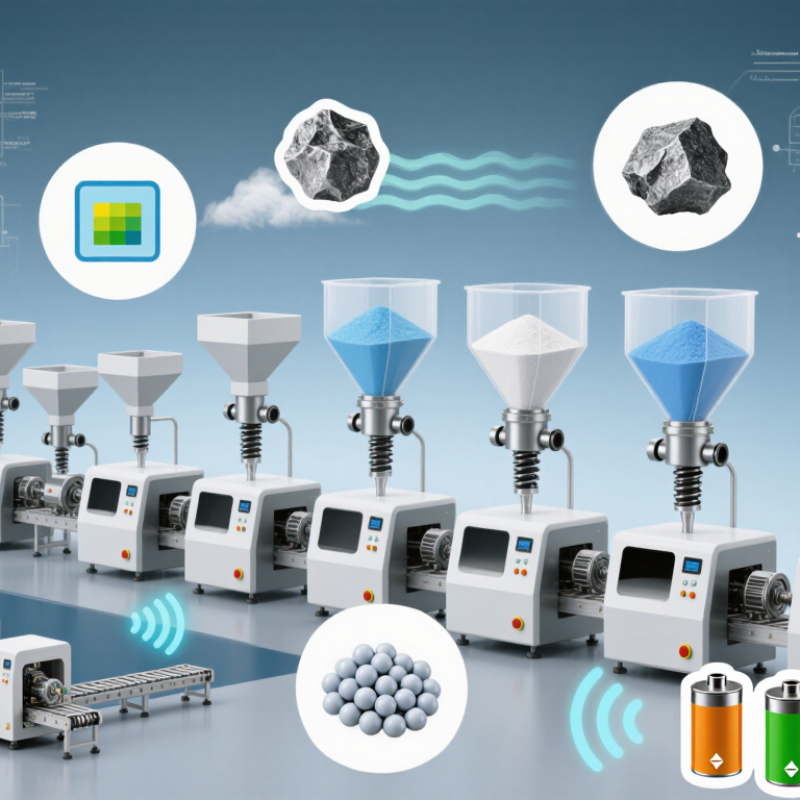
When comparing China’s top powder feeder manufacturers in 2026, dosing technology deserves more attention than catalog rankings. Gravimetric and volumetric feeders solve different production problems. The correct choice depends on powder behavior, output range, and accuracy requirements.
A gravimetric feeder measures weight continuously through load cells. Its controller adjusts screw speed when bulk density changes. This matters for powders that bridge, absorb moisture, or vary between batches. In a plant trial, operators may see steadier dosing at 2.5 kilograms per hour, even when the powder level falls. Gravimetric systems also support traceable records and easier process verification. However, vibration, refill movement, and poor calibration can disturb the reading. Small errors still happen.
Volumetric feeders measure volume, usually through a calibrated screw or rotary cavity. They are simpler, often more compact, and suitable when powder density remains stable. A technician can set the screw to deliver a target volume per revolution, then check the actual mass with a scale. The method is practical. It is not automatically precise. Changes in humidity or particle size may alter the delivered weight without changing the screw speed. Regular calibration becomes essential.
Engineers sometimes favor gravimetric dosing too quickly, though its sensors and controls require more maintenance. A sensible evaluation should compare repeatability, cleaning time, refill behavior, and total operating cost, not accuracy claims alone.
China Top 10 Powder Feeder Manufacturers in 2026?
A credible 2026 ranking should test more than catalogue claims. The key benchmark is ±0.5% feeding accuracy across repeated trials, not one successful sample. Test results should cover powder density, moisture, particle size, and screw speed. Throughput also matters. A feeder delivering 500 kilograms per hour may be unsuitable if accuracy collapses above 300 kilograms per hour. In practical audits, I would record ten-minute output intervals, hopper level, vibration, and cleaning time. Small details expose large inconsistencies.
ISO 9001 certification supports process control, but it does not guarantee dosing performance. The ISO Survey 2023 recorded 1,265,216 ISO 9001 certificates worldwide, showing broad adoption rather than automatic quality. Deloitte’s 2024 Smart Manufacturing Survey found that 86% of manufacturers view smart manufacturing as important for competitiveness. Therefore, the strongest suppliers should provide calibration records, alarm histories, and traceable inspection data. Digital dashboards help. They can also hide weak sensors. That risk deserves attention.
Tips: Ask for a witnessed ±0.5% test using your actual powder. Request throughput data at low, medium, and maximum rates. Check whether ISO 9001 covers the manufacturing site, not only the parent company. Review spare-part response times and cleaning access. My evaluation remains imperfect; laboratory powder rarely behaves like production powder. A cautious buyer should repeat acceptance testing after installation.
| Rank | Anonymous Profile | Feeder Configuration | Accuracy (±%) | Typical Throughput (kg/h) | ISO 9001 Status | Suitable Powder Types | Control & Integration | Dust-Control Readiness | Service Response Score / 10 | Overall Score / 100 |
|---|---|---|---|---|---|---|---|---|---|---|
| 1 | Anonymous Profile A | Loss-in-weight twin-screw feeder | ±0.25 | 5–1,200 | Certified | Fine, cohesive, abrasive, and difficult-flow powders | PLC, Modbus TCP, 4–20 mA, recipe management | High | 9.2 | 94 |
| 2 | Anonymous Profile B | Gravimetric single-screw feeder | ±0.30 | 3–900 | Certified | Plastic additives, minerals, detergents, food powders | PLC, Ethernet, touchscreen HMI, batch control | High | 8.9 | 92 |
| 3 | Anonymous Profile C | Volumetric twin-screw feeder | ±0.35 | 4–1,000 | Certified | Free-flowing and moderately cohesive powders | PLC, RS-485, remote diagnostics, multi-feeder control | High | 8.6 | 90 |
| 4 | Anonymous Profile D | Loss-in-weight single-screw feeder | ±0.40 | 2–750 | Certified | Polymer pellets, masterbatch, powders, regrind blends | PLC, EtherNet/IP gateway, alarm and trend logging | Medium–High | 8.4 | 88 |
| 5 | Anonymous Profile E | Micro-loss-in-weight screw feeder | ±0.45 | 0.1–250 | Certified | Pharmaceutical excipients, pigments, catalysts, fine powders | Recipe software, USB data export, PLC communication | High | 8.1 | 86 |
| 6 | Anonymous Profile F | Twin-screw batch feeder | ±0.48 | 5–800 | Certified | Food ingredients, chemical powders, mineral fillers | Touchscreen HMI, PLC, batch reports, weighing feedback | Medium–High | 7.9 | 84 |
| 7 | Anonymous Profile G | Volumetric single-screw feeder | ±0.50 | 3–650 | Certified | Granules, pellets, free-flowing powders, additives | Basic PLC, analog signals, local HMI, speed control | Medium | 7.7 | 81 |
| 8 | Anonymous Profile H | Gravimetric vibratory feeder | ±0.50 | 1–500 | Certified | Free-flowing powders, pellets, crystals, granular materials | PLC, variable-frequency drive, remote start/stop | Medium | 7.5 | 79 |
| 9 | Anonymous Profile I | Compact auger micro-feeder | ±0.50 | 0.05–150 | Certified | Fine powders, laboratory materials, low-dose additives | Digital speed controller, PLC-ready, recipe memory | Medium | 7.3 | 77 |
| 10 | Anonymous Profile J | Basic screw dosing feeder | ±0.50 | 2–400 | Documentation required | General-purpose powders and dry premixes | Local control panel, analog output, optional PLC interface | Basic | 7.0 | 74 |
China’s top ten powder feeder manufacturers in 2026 are best compared by product capability, not visibility alone. Their portfolios commonly include loss-in-weight feeders, volumetric screw feeders, vibratory units, and micro-powder dosing systems. Some also provide calibration software, dust control, load cells, and customized hoppers. Small details matter: a stable screw pitch, sealed outlet, and accessible cleaning area can determine production reliability.
The key sectors are plastics, pharmaceuticals, food processing, battery materials, chemicals, and additive manufacturing. MarketsandMarkets’ 2024 Powder Metallurgy Market report identifies Asia-Pacific as the largest regional market, reflecting strong demand for controlled powder handling. Grand View Research also reports continuing growth in additive manufacturing, where consistent powder delivery affects layer quality and material waste. China’s battery industry adds another demanding application, especially for cathode, anode, and conductive powder preparation.
A serious 2026 evaluation should compare feed-rate accuracy, repeatability, material compatibility, and after-sales testing. Factory trials are more useful than polished brochures. I would request test records using the actual powder, because flowability changes with humidity, particle shape, and electrostatic behavior. The ranking is not absolute. A technically capable supplier may still have weak documentation or slow service. Buyers should verify standards, spare-part availability, cleaning procedures, and performance under continuous operation before selecting among the ten leading manufacturers.
China Top 10 Powder Feeder Manufacturers in 2026?
Comparing 0.1–1,000 kg/h Capacity, Control Systems, and Material Handling
China’s leading powder feeder manufacturers now cover laboratory dosing near 0.1 kg/h and industrial feeding above 1,000 kg/h. Capacity alone proves little. A stable feeder must match bulk density, particle size, moisture, and required accuracy. In factory trials, twin-screw systems often handle cohesive powders better than simple vibratory units. However, abrasive materials can shorten screw and seal life. That detail is easy to overlook.
Control systems deserve equal attention. Entry-level feeders may use manual speed settings, while advanced systems connect load cells, PLCs, and recipe software. Closed-loop control can correct flow changes during production. Communication options may include analog signals, industrial Ethernet, or remote monitoring. Operators should request repeatability data at low, medium, and maximum rates. A feeder reaching 1,000 kg/h may perform poorly at 0.1 kg/h. I once focused too heavily on maximum output and underestimated minimum stable flow.
Tips: Test the actual powder, not a substitute. Measure bridging, dust release, and refill disturbance. Check whether calibration remains reliable after cleaning. Ask for service response times, spare-part availability, and documented factory results. A transparent supplier should explain limitations, not promise perfect accuracy. Small errors become expensive over long production runs.
China Top 10 Powder Feeder Manufacturers in 2026?
A serious shortlist should begin with GMP evidence, not catalogue photos. Ask for material certificates, cleaning validation support, calibration records, and batch-traceable documentation. FDA 21 CFR Parts 210 and 211 require controlled manufacturing processes and reliable equipment records. Inspect the feeder’s product-contact surfaces closely. Welds, seals, dead zones, and tool-free access matter.
Safety deserves equal attention. OSHA’s Combustible Dust National Emphasis Program recorded 281 dust explosions, 119 deaths, and 718 injuries in the United States between 1980 and 2005. Request a documented dust-hazard assessment, grounding plan, and ignition-control strategy. For explosive atmospheres, verify ATEX suitability or IECEx certification for the complete assembly, not one isolated component. A certificate alone is not enough.
Service can decide the real purchase price. Check response times, spare-part availability, remote diagnostics, and technician training. Calculate total cost across five years, including installation, validation, cleaning, energy, downtime, and rejected batches. A low initial quote may hide expensive integration work. It happens. I would also ask for references handling similar powders, especially cohesive or fragile materials. Industry surveys from ISPE repeatedly emphasize lifecycle control and data integrity, yet buyers still compare only feed-rate accuracy and purchase price. That shortcut deserves reconsideration.