


Top 10 Bulk Sorter Suppliers for Global Buyers
A Bulk Sorter can turn a fast-moving production line into a more consistent one, but the right choice depends on the material. Grain, nuts, plastics, and fresh produce behave differently under a camera, air jet, or conveyor belt. For global buyers, supplier selection therefore involves more than comparing machine speed. Detection accuracy, throughput, service coverage, spare-parts access, and operator training all matter on the factory floor.
The need for reliable sorting is clear. FAO’s The State of Food and Agriculture 2019 estimated that 13.8% of food was lost between harvest and retail in 2016. That figure does not measure what sorting equipment alone can prevent. Still, it shows why careful handling and quality control matter across supply chains. W. Edwards Deming, a leading quality-management expert, put the principle plainly: “You can’t inspect quality into a product.” For buyers, that means assessing the whole process, not just the sorter’s headline specification.
This Top 10 guide compares suppliers through practical questions: What materials do they handle well? Can they demonstrate results using your samples? How quickly can technicians respond at your site? A polished brochure is not a factory trial. Request measurable test results, clarify performance assumptions, and check support arrangements in your region. No shortlist removes every uncertainty. That is worth remembering. A suitable Bulk Sorter should fit the actual product, operating conditions, and service needs—not merely a projected capacity.
Understanding Bulk Sorters and Their Industrial Applications
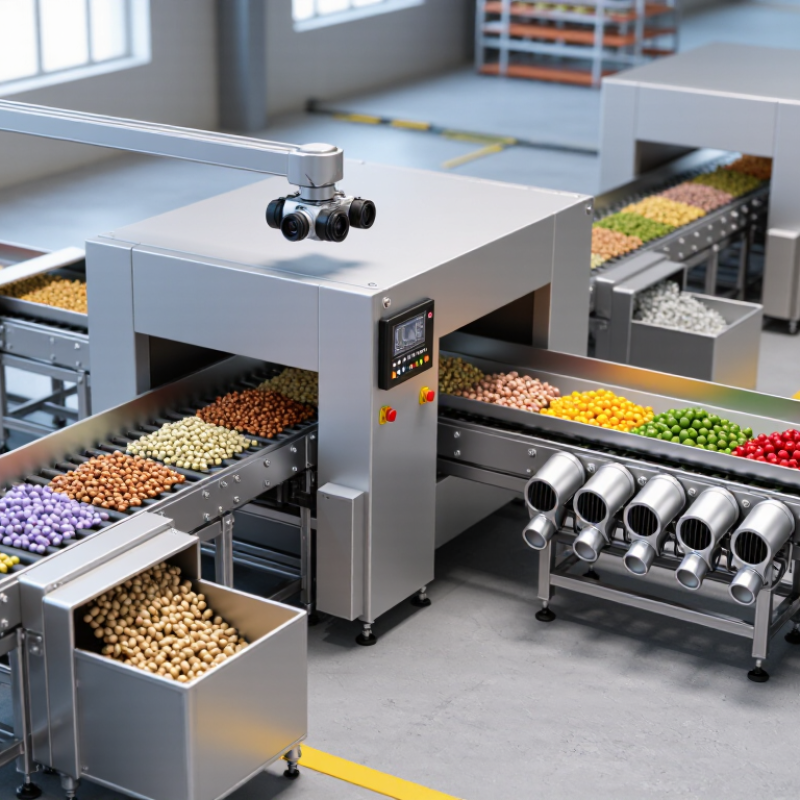
Bulk sorters separate loose materials by measurable differences, such as color, size, shape, or density. Depending on the system, cameras, air jets, or mechanical gates identify and divert selected items as they move along a conveyor. The goal is steadier product quality and less manual inspection. Not magic.
These machines serve food processing, grain handling, mining, and recycling operations. A grain facility might remove discolored kernels, while a recycling line can separate materials by color or composition. Performance depends on more than the sorter itself. Feed rate, material moisture, dust, and inconsistent particle sizes can affect detection. A small change in lighting or belt speed may matter. Buyers should assess the whole process, not just the machine’s headline capacity.
Tips: Ask suppliers to test representative samples from your own production. Check sorting accuracy, throughput, reject rates, cleaning needs, and access to service parts. Confirm that the proposed setup fits existing conveyors and available floor space. Keep test results and operating conditions on record. One trial may not capture seasonal variation, so plan for follow-up checks.
Top 10 Bulk Sorter Suppliers for Global Buyers - Understanding Bulk Sorters and Their Industrial Applications
A practical overview of ten common bulk-sorting equipment specializations. The entries describe equipment categories and typical industrial uses, not named or ranked companies.
| No. | Supplier Specialization | Typical Sorting Method | Common Materials | Industrial Applications | Key Buying Considerations |
|---|---|---|---|---|---|
| 1 | Grain and seed optical sorters | Camera-based color and shape recognition; rejected items are commonly removed by air jets. | Rice, wheat, corn, pulses, beans, and seeds | Grain milling, seed processing, and food-grade ingredient preparation | Assess target defect size, product and defect color contrast, feed consistency, and cleaning access. |
| 2 | Food produce optical sorters | Visible-light imaging, with optional near-infrared sensing, to identify color, shape, or surface defects. | Nuts, dried fruit, frozen vegetables, and selected fresh produce | Food processing, packing, and removal of discolored or foreign material | Check food-contact materials, washdown requirements, product handling, and performance on the actual product mix. |
| 3 | Plastic flake and regrind sorters | Optical and near-infrared identification to separate polymer types or colors. | PET, HDPE, PP, and mixed post-consumer plastic flakes | Plastics recycling and production of higher-purity recycled feedstock | Confirm detectable polymer types, flake size range, moisture limits, and required output purity. |
| 4 | Mining and mineral optical sorters | Optical sensors identify differences in color, texture, or surface characteristics between particles. | Selected ores, industrial minerals, and aggregates | Ore pre-concentration, waste-rock rejection, and mineral processing | Request ore-specific testing; particle size, surface condition, and mineral contrast affect suitability. |
| 5 | Laser-based mineral sorters | Laser sensing detects selected surface or material characteristics and supports particle separation. | Some industrial minerals, ores, and stone materials | Mineral upgrading and removal of visibly or spectrally distinct particles | Verify that the target material has a detectable response and that test samples represent site conditions. |
| 6 | X-ray bulk inspection sorters | X-ray imaging detects density differences within products or particles. | Packaged or unpackaged foods, nuts, and selected mineral materials | Foreign-material detection, product inspection, and separation of certain internal defects | Define the target contaminant or defect, product depth, line speed, and applicable radiation-safety requirements. |
| 7 | Bulk-flow metal detection systems | Electromagnetic detection identifies ferrous and non-ferrous metal in a moving product stream. | Grains, powders, plastics, aggregates, and other conveyed bulk materials | Contamination control and protection of downstream processing equipment | Specify the conveyor or chute arrangement, product effect, target metal, and required reject mechanism. |
| 8 | Magnetic separation equipment suppliers | Permanent or electromagnetic fields attract and remove susceptible ferrous material. | Bulk solids, ores, grains, plastics, and recycled materials | Ferrous contamination removal, material recovery, and equipment protection | Choose the separator type and installation position based on material depth, flow rate, and cleaning needs. |
| 9 | Density and air-classification systems | Airflow separates particles according to differences in aerodynamic behavior; some systems combine this with density separation. | Lightweight packaging, grain, seeds, plastics, and mixed recyclables | Removal of light contaminants, husks, dust, and lightweight fractions | Review particle size, moisture, bulk density, dust control, and the stability of the feed stream. |
| 10 | Screening and size-classification systems | Vibrating, rotary, or other screens separate material into size fractions using apertures. | Aggregates, minerals, grains, fertilizers, and powders | Particle-size grading, scalping, and preparation of bulk material for later processing | Match screen opening and deck configuration to the required cut size, throughput, and material properties. |
Selection note: Sorting results depend on material characteristics, feed presentation, operating conditions, and the chosen detection and rejection configuration. Buyers should request trials using representative samples and confirm performance requirements before purchase.