How to Choose a High Pressure 3 Way Ball Valve?
Choosing a high pressure 3 way ball valve requires more than comparing prices or reading a product label. The valve must match the system’s pressure, temperature, media, and flow direction. A mismatch can cause leakage, poor control, or premature wear. The selection process should begin with real operating data, including pressure peaks, cycling frequency, and pipe size.
Port design matters. L-port and T-port configurations support different flow paths. An L-port valve commonly directs flow between two outlets. A T-port valve can connect or distribute flow through several routes. Confirm the required switching pattern before ordering. Also examine body materials, seat compounds, stem construction, and end connections. Stainless steel may suit corrosive environments, while reinforced seats can support demanding pressure cycles. However, material names alone do not prove compatibility.
Reliable manufacturers provide pressure ratings, temperature ranges, dimensional drawings, and inspection records. Look for hydrostatic testing, leakage testing, and traceable quality procedures. Certifications should match the installation’s industry and region. Experienced engineers also review actuator torque, fail-safe requirements, maintenance access, and installation space. A valve that fits the pipe may still fail operationally.
Small details matter. A cramped handle creates trouble. A poorly supported actuator can stress the stem. In practice, product selection is rarely perfect at the first attempt. Operating conditions may be incomplete, and catalog ratings can require careful interpretation. Ask suppliers for written confirmation instead of relying on assumptions. This guide explains how to compare specifications, verify performance, and choose a high pressure 3 way ball valve with greater confidence and practical judgment.
Define the Flow Paths and Valve Functions You Need
How to Choose a High Pressure 3 Way Ball Valve?
Define the Flow Paths and Valve Functions You Need
Choosing a high-pressure 3-way ball valve starts with the flow map, not the pressure rating. Draw each inlet, outlet, and isolation point on paper. A simple sketch prevents costly port confusion. The first sketch is often wrong. Revise it after checking the actual piping.
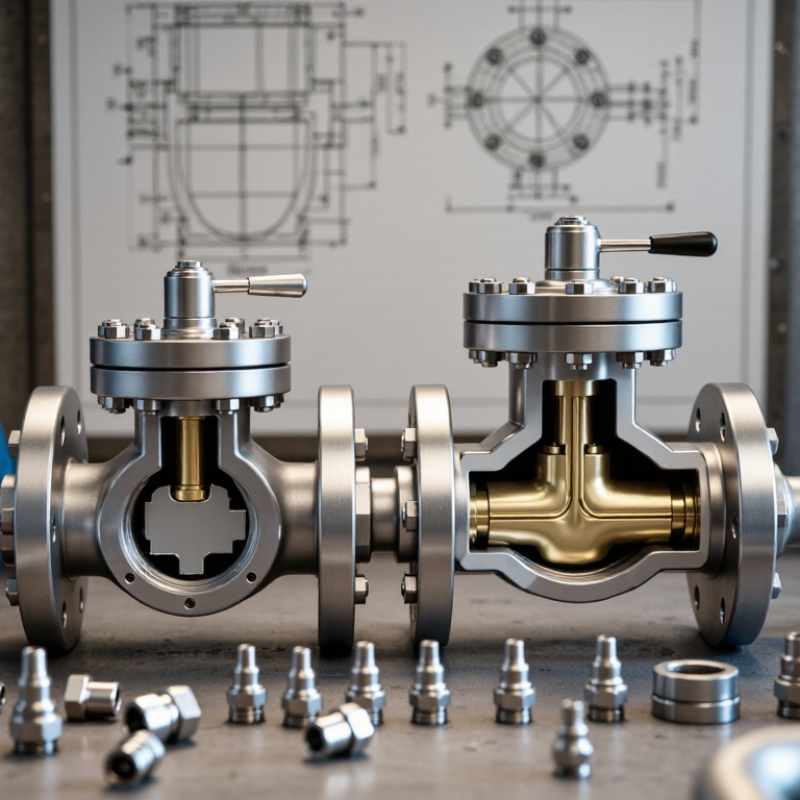
An L-port usually directs flow between two connections. A T-port can connect three paths, depending on the handle position and bore design. Do not assume every T-port provides safe shutoff in every position. Confirm the port diagram and tested operating positions. Define whether the valve must divert, mix, isolate, or select one supply line. For example, hot fluid may flow from one pump to either of two vessels. Another system may combine two compatible streams into one outlet.
Mixing requires more than three open holes. Check pressure balance, temperature, viscosity, and the required flow coefficient. At high pressure, trapped fluid between closed seats can create pressure buildup. A relief arrangement or pressure-equalizing design may be necessary. This detail is easy to miss.
Match the body, ball, seats, and seals to the actual medium and temperature range. Check pressure ratings at operating temperature, not only at room temperature. Select manual, pneumatic, or electric actuation according to cycle frequency and available utilities. Include position feedback when remote verification matters. In field reviews, I would also check torque, flange alignment, material certificates, and leakage test records. A valve can fit perfectly and still fail its intended function. That deserves a second review.
Match Pressure, Temperature, and Media Compatibility Requirements
How to Choose a High Pressure 3 Way Ball Valve?
Match Pressure, Temperature, and Media Compatibility Requirements
Selecting a high pressure 3 way ball valve starts with real operating conditions, not the pipeline’s nominal size. Record normal pressure, maximum pressure, temperature range, and possible pressure surges. A valve rated for cold service may lose capacity at elevated temperatures. Check the pressure rating at the actual operating temperature.
Keep it practical. Does the valve need an L-port or a T-port flow pattern? The wrong configuration can block the intended route or mix streams unexpectedly. Consider both working pressure and shutoff pressure. A pump startup may create a brief spike that ordinary calculations miss. I have seen specifications focus on steady pressure while ignoring these short events. That approach needs reconsideration.
Media compatibility requires equal care. Compare the fluid with the body, ball, stem, seats, and seals. Water, solvents, compressed gas, abrasive slurry, and corrosive chemicals demand different material choices. Temperature changes can harden, soften, or expand sealing materials. Check viscosity, suspended particles, and cleaning chemicals too. A valve may handle the fluid chemically but still suffer rapid wear from solids. Do not guess.
Review documented test results, leakage class, pressure testing, and material certificates from a qualified supplier. Verify whether the valve is suitable for frequent cycling or only occasional isolation. Installation details matter as well. Poor alignment can load the valve body and shorten service life. A careful selection sheet may feel excessive, but missing one condition can make a strong valve unreliable.
Choose the Right Valve Materials and Connection Standards
When choosing a high pressure 3 way ball valve, material selection should follow the medium, temperature, and pressure cycle. Carbon steel suits dry gas and general industrial service. Stainless steel resists moisture and many corrosive fluids. Duplex stainless steel offers stronger chloride resistance, but its cost needs justification. For seats, PTFE works well at moderate temperatures. PEEK may perform better under higher heat and load. Do not select by pressure alone. A valve rated for 6,000 psi may lose capacity at elevated temperature. ASME B16.34 requires pressure-temperature ratings, materials, and testing controls. These details matter more than a polished product sheet.
Connection standards must match the entire piping system. NPT threads follow ASME B1.20.1, while BSP connections commonly follow ISO 7-1. They are not automatically interchangeable. Flanged valves should match ASME B16.5 pressure classes, facing types, and bolt patterns. The 2024 Industrial Valves Market report by Grand View Research projects continued market growth through 2030, driven by energy, water, and process industries. That growth does not remove specification mistakes. In field work, a mismatched thread can leak before commissioning.
Tips:
Confirm the valve’s pressure-temperature chart, not only its headline rating. Check media compatibility with body, stem, ball, and seats. Request material certificates and pressure-test records. I have seen buyers overlook seal swelling. It is a small detail with expensive consequences. When standards conflict, ask the engineer to document the selected connection and test basis.
Evaluate Port Design, Actuation, and Operating Torque
How to Choose a High Pressure 3 Way Ball Valve?
Port design determines how fluid moves, while actuation controls how reliably the valve changes direction. A 3-way valve with an L-port suits simple switching between two lines. A T-port supports mixing or diverting flow between three connections. Full-bore designs reduce pressure loss, but they usually require more material and space. The 2024 Global Valve Market Report by Fortune Business Insights estimates the worldwide valve market at more than USD 76 billion in 2023. That scale reflects demand for dependable flow control, not permission to overlook small design details. Check pressure drop, sealing direction, cavity pressure, and the required flow path under every operating position.
Actuator selection should begin with measured operating torque, not only valve size. Breakaway torque can rise after long idle periods, cold starts, or contaminated service. Add running torque, seat friction, pressure effects, and a documented safety margin. ISO 5211 provides a common interface for mounting actuators, but it does not replace application-specific torque testing. The U.S. Department of Energy’s 2023 Industrial Decarbonization Roadmap highlights energy losses from inefficient industrial systems, making unnecessary actuator power worth examining. Pneumatic actuators offer fast movement, while electric actuators provide easier position feedback and slower, controlled travel. In field checks, I would verify torque at minimum and maximum pressure. I would also question catalog values. They can look precise, yet real seals age, and installation alignment is rarely perfect.
How to Choose a High Pressure 3 Way Ball Valve?
Evaluate port design, actuation, and operating torque by comparing typical engineering behavior. Full-port valves usually minimize pressure loss, reduced-port valves balance flow and torque, while V-port designs provide better throttling control but generally require higher operating torque.
Scores are normalized engineering tendencies on a 0–10 scale, not manufacturer ratings. Final actuator selection should be based on the valve’s measured breakaway and running torque, maximum differential pressure, cycle frequency, temperature, and the required safety factor.
Verify Safety Ratings, Maintenance Needs, and Supplier Quality
Choosing a high-pressure three-way ball valve starts with verified safety ratings, not attractive specifications.
Match the valve’s pressure class, temperature range, and media compatibility to the actual system. A valve rated for cold water may fail under hot oil, corrosive chemicals, or rapid pressure changes. Request test certificates, material records, and pressure-test results from the supplier. Do not rely on a catalog claim alone. During site checks, I compare the marking on the valve body with the certificate and purchase order. Small mismatches matter.
Maintenance needs should be visible before installation.
Check whether seats, seals, stems, and handles can be inspected without removing nearby piping. In a dusty plant, a protected stem and simple flushing point can reduce unplanned service work. Ask how often seals require replacement and whether spare parts remain available throughout the valve’s expected service life. I also test the switching positions slowly, because a stiff quarter-turn may signal contamination or poor alignment. That test is easy to skip.
Supplier quality deserves the same scrutiny as valve design.
A reliable supplier explains limitations, provides traceable documentation, and answers technical questions without vague promises. Review production controls, inspection methods, delivery records, and support after installation. A sample valve can reveal machining marks, uneven coating, or unclear flow arrows before a larger order. I once treated a low price as evidence of efficiency; delayed spare parts proved otherwise. That was my mistake.